
When embarking on a major home addition or remodel, it is easy to let your excitement overshadow your legal protections. Homeowners are often so eager to get their projects started that they willingly write large check deposits to general contractors before any work has actually commenced on site.
We learned that understanding your state’s consumer protection laws is your first and most effective line of defense. Many states have strict regulations governing how much money a home improvement contractor can legally collect before they begin working. In California, these rules are incredibly strict, designed to protect homeowners from upfront financial risk and keep builders accountable.
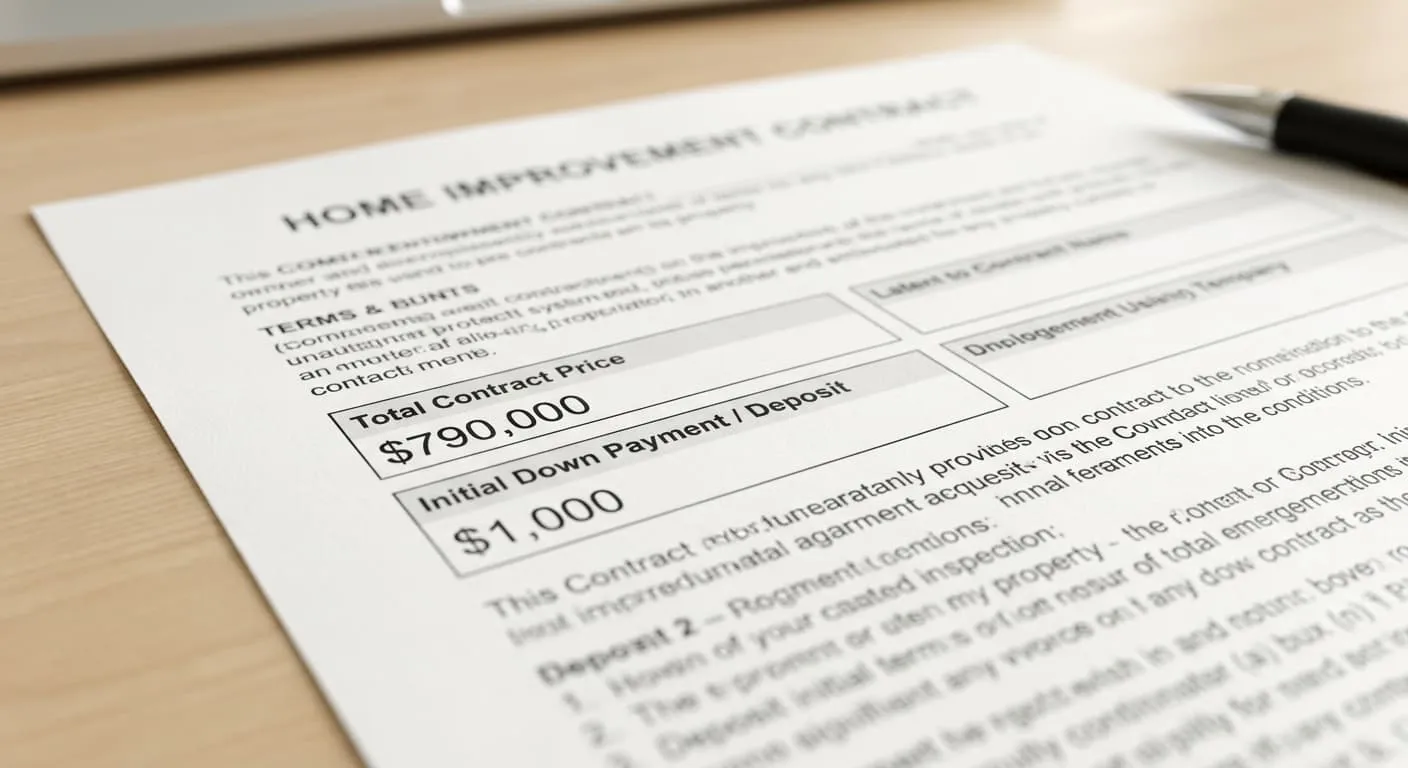
California’s $1,000 Rule: B&P Code Section 7159
In California, residential construction projects are governed by the Contractors State License Board (CSLB) and California Business and Professions Code Section 7159. This law sets a strict cap on the down payment a contractor can request or collect before any work begins on a home improvement contract.
- The Rule: A contractor cannot legally collect an upfront deposit of more than 10% of the total contract price or $1,000, whichever is less.
- The Math: For our $790,000 base contract, 10% would have been $79,000. However, because of the “whichever is less” legal clause, our builder was only allowed to collect a deposit of exactly $1,000 upon signing the contract.
Even if you are undertaking a million-dollar remodel, if the project is in California, your contractor cannot legally ask you for a $5,000, $10,000, or $50,000 down payment. This law is non-negotiable, and any contract clause trying to waive this protection is legally void.
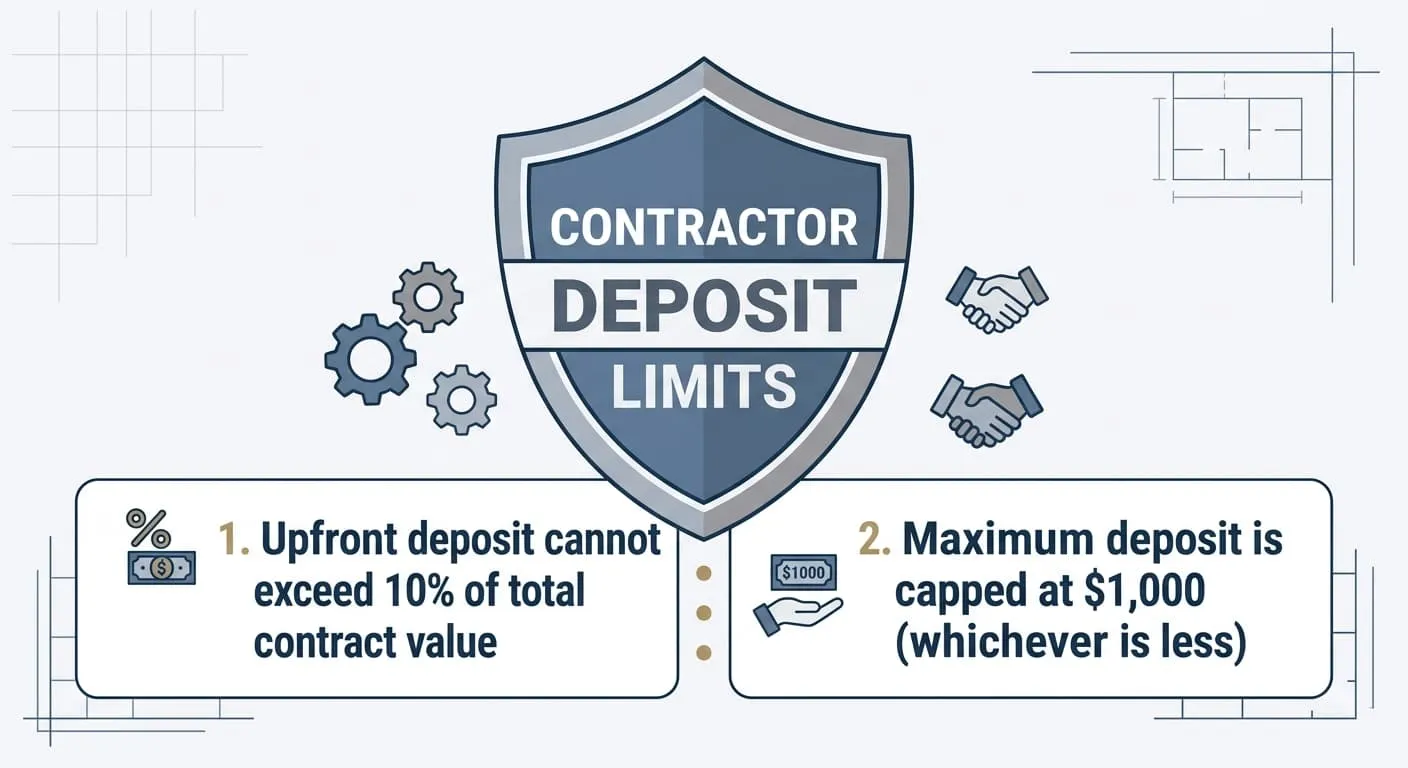
Why Low Initial Deposits Protect Your Investment
This strict down payment limit is designed to prevent “front-loading”—a situation where a builder has collected more of your money than the physical value of work they have completed on site. Low initial deposits protect your investment in three key ways:
- Reduces Contractor Abandonment Risk: If a contractor collects a massive upfront deposit and then goes out of business, files for bankruptcy, or abandons your project, recovering your funds can be incredibly difficult. Keeping the deposit low minimizes your initial financial exposure.
- Prevents Funding Other Projects: In the construction industry, struggling builders sometimes use deposits from new clients to pay off past material suppliers or wrap up previous, delayed projects. This creates a financial chain reaction that puts your remodel at risk.
- Enforces Milestone Accountability: When the deposit is low, the contractor relies on completing specific construction phases (like demolition or pouring the foundation) to trigger their next progress payment. This keeps the project moving forward efficiently.
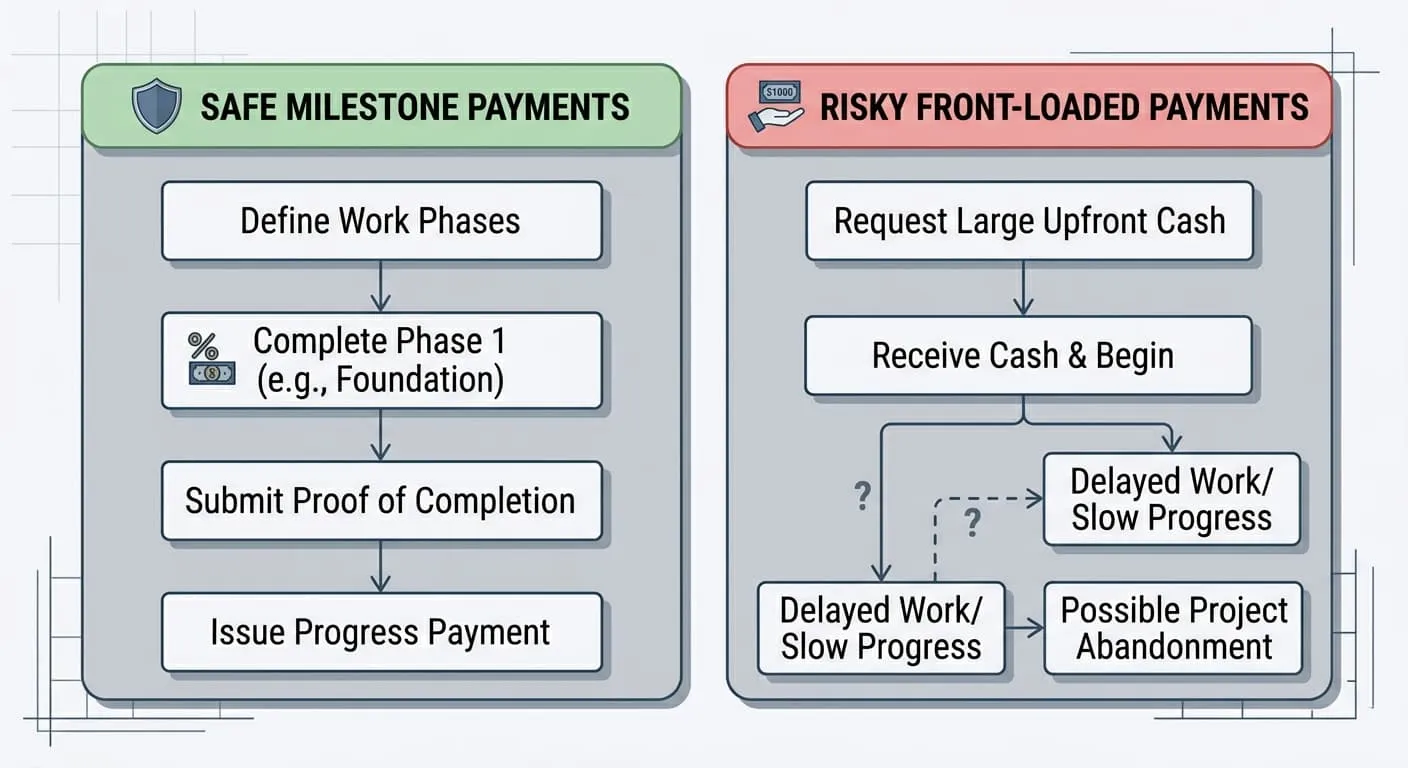
The “Material Pre-Purchase” Excuse
A common tactic among contractors is to request a large upfront payment to “buy materials” or “secure a subcontractor crew” before they break ground. Under California law, this is illegal.
Progress payments can only be requested and collected for work that has actually been completed or for materials that have actually been delivered to your property. If a contractor wants to order your windows, plumbing fixtures, or siding, they must either fund that purchase themselves through their material supplier accounts, or wait until the materials arrive on your job site before requesting reimbursement.
Crucial Homeowner Call-Outs: What to Watch For
If you are currently negotiating a remodel contract, keep these two critical legal details in mind:
- Check Your State’s Legal Deposit Limits: Before signing any home improvement contract, visit your state’s contractor licensing board website to verify the legal deposit limits. In California, remember the rule is strictly 10% or $1,000, whichever is less.
- Recognize High Deposit Requests as a Warning Sign: If a contractor pressures you to pay a high upfront deposit to “get on their schedule” or “buy lumber early,” treat this as a major red flag. It often indicates that the contractor is facing cash flow issues, which can translate into subcontractor payment delays and material liens on your property later.
Home Improvement Contract Review Checklist
Walk through the full contract before signing — payment structure, deposit limits, delay clauses, lien releases, and contractor verification. Built from the exact protections covered in this episode.
Open the Checklist →Know What’s in Your Contractor’s Quote
Upload your contractor’s proposal or agreement and let AI flag anything unusual — including payment terms that don’t align with your legal protections.
Analyze Your Quote →Understanding and enforcing your consumer rights during the contract signing phase sets a professional tone for the entire project, keeping your funds protected and your builder accountable.
In Episode 9: Surviving the Plan Check, we will look at the realities of the permitting process, sharing our tips for navigating the back-and-forth of city plan reviews and handling the department redlines that can reshape your layout before construction begins.