
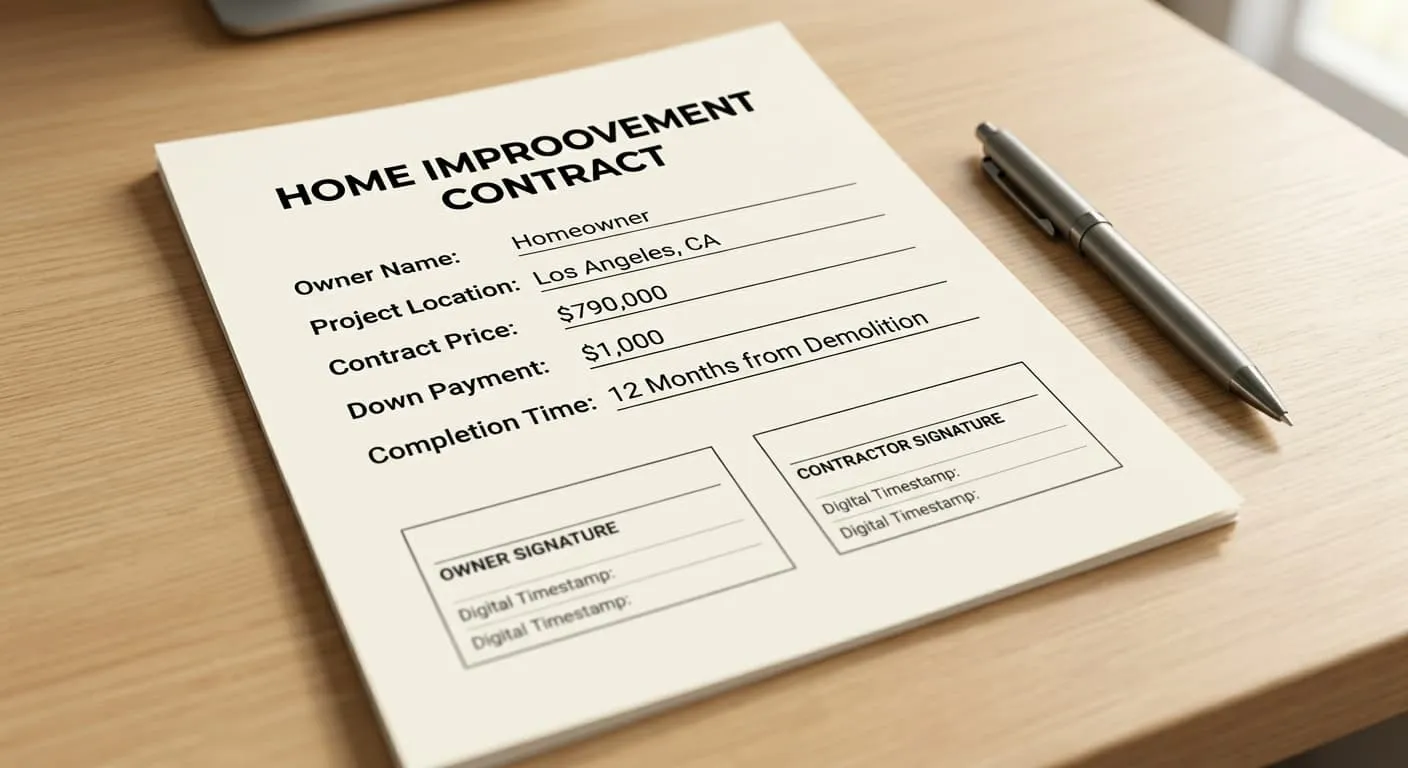
Executing a construction contract for a major home remodel is a significant financial step. For our project—a complete down-to-the-studs first-floor remodel and second-story addition—we were signing a base contract valued at $790,000, with total project costs ultimately exceeding $1 million once change orders, materials, and contingency expenses were factored in.
At this scale, we quickly realized that while architectural plans define how your future home will look, the contract defines how your finances and peace of mind are protected. A standard, generic template provided by a builder often favors the contractor. To protect our investment, we worked closely with our construction team to incorporate specific legal protections, milestone-based payments, and post-completion warranties into our primary Home Improvement Contract (HIC).
Milestone-Based Payments: Protecting Your Capital
One of the most common pitfalls in residential remodeling is “front-loading” the contract—paying the contractor more money upfront than the actual value of work completed on site. If a builder falls behind schedule, goes out of business, or abandons the project, the homeowner is left with an unfinished house and little financial recourse.
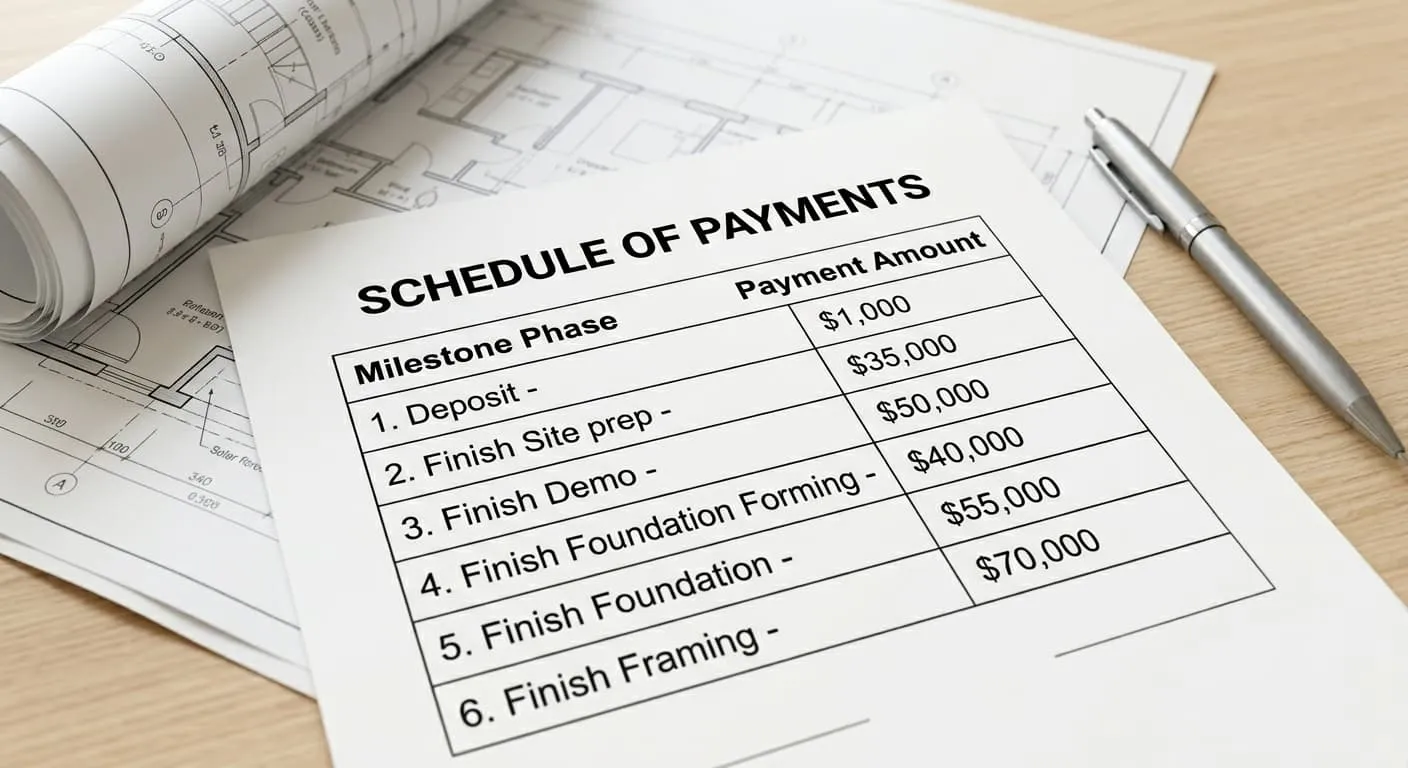
To prevent this, we structured our payment schedule into 24 distinct, milestone-based progress payments.
- The Upfront Deposit: Strictly limited to California’s legal limit of $1,000.
- Structural Milestones: Payments tied directly to completed structural stages (e.g., $35,000 after Site Prep, $50,000 after Demolition, $40,000 after Foundation Forming, and $70,000 after Rough Framing).
- Systems and Finishes: Payments tied to specific system rough-ins and finishes (e.g., $50,000 after Rough Plumbing, $35,000 after Window Installation, $20,000 after Primer, and $30,000 after Flooring).
- The Final Holdback: A final $6,000 held back until the entire project is completed, and the city inspector signs off on the final certificate of occupancy.
By utilizing this milestone framework, we ensured that at no point during the 12-month build were we financially exposed. If work paused on site, our payments paused accordingly.
Managing Project Delays: The Rent Reimbursement Clause
A major home remodel and second-story addition typically requires the homeowners to move out and find temporary housing. For a projected 12-month build, that means 12 months of renting elsewhere. If the project drags on for 15 or 18 months, those extra rent payments can quickly deplete your contingency reserves.
To align our builder’s timeline with our own, we negotiated a specific delay penalty clause:
- The Timeline: A target schedule of 12 months from the start of structural demolition.
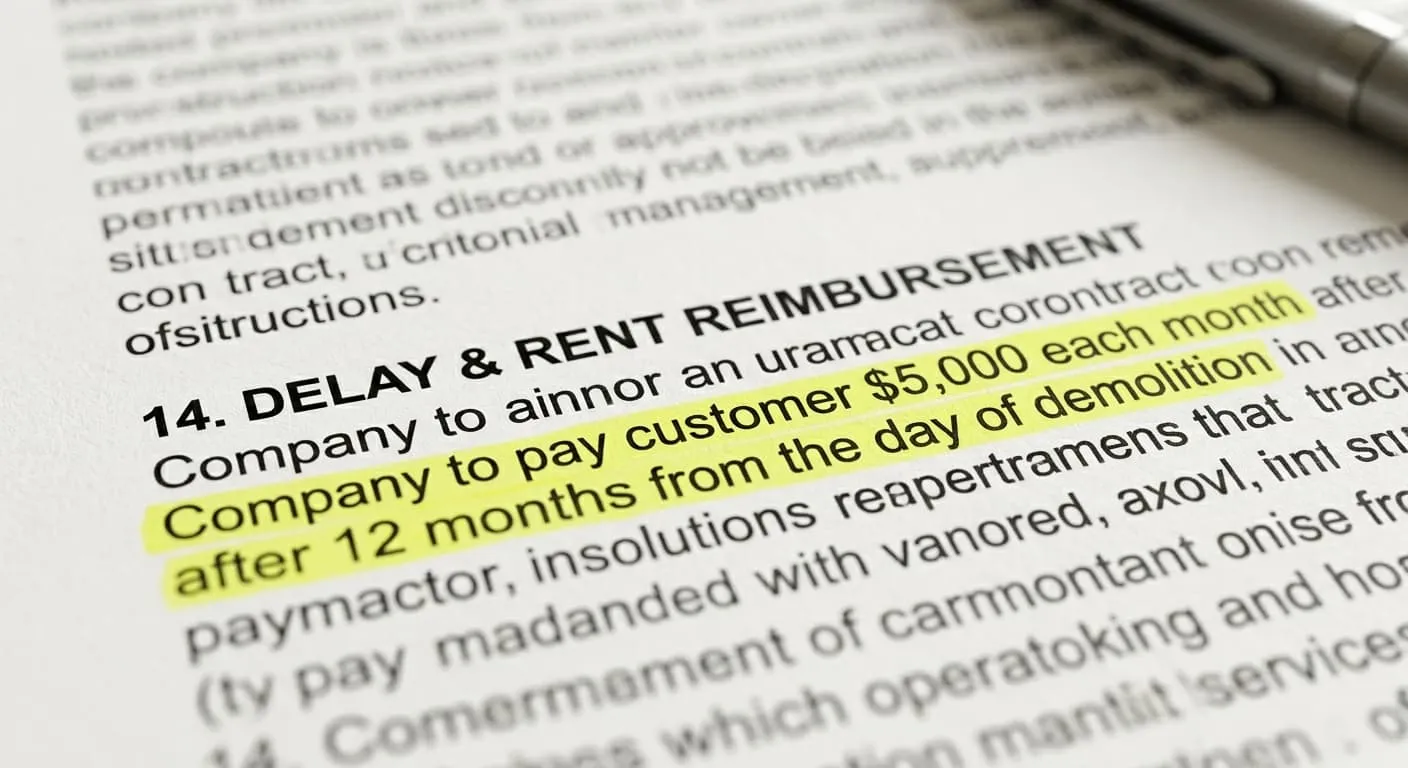
- The Penalty: If construction exceeded 12 months, the builder agreed to pay us a monthly penalty of no less than $5,000 to cover our temporary rental and living costs.
- The Exclusions: Delays caused by natural disasters (force majeure), city planning inspection backlog, or homeowner-initiated design modifications were excluded from the penalty calculation.
This clause acted as a financial incentive, keeping the general contractor focused on managing their crews and scheduling subcontractors efficiently to avoid delays.
Strengthening Post-Completion Warranties
Most standard construction contracts offer a basic, state-mandated one-year warranty on workmanship. We negotiated several extended warranties to protect our home long-term:
- Extended Workmanship Warranty: We negotiated our builder’s standard one-year warranty on all workmanship, materials, and mechanical systems up to two years.
- Long-Term Bathroom Waterproofing: Because a major portion of our budget was dedicated to bathrooms (including a wet-room layout in the master bath), we secured a 10-year warranty for bathroom waterproofing.
- The Handyman Maintenance Clause: To help with ongoing home maintenance, our builder included a clause providing 7 individual days (8 hours each) of handyman services to be used at our discretion within 7 years of project completion.
Crucial Homeowner Call-Outs: What to Watch For
If you are currently reviewing a contract for your upcoming remodel, here are two critical legal details to negotiate:
- Tie Payments to “Completed and Verified” Work: Ensure your contract states that progress payments are due only after the specified milestone has been fully completed and verified by the homeowner or an independent inspector. Never accept arbitrary calendar dates (e.g., “Pay $50,000 on June 1st”), which force you to make payments even if the project is delayed.
- Explicitly Define Delay Exclusions: If you include a delay penalty or rent reimbursement clause, make sure it clearly defines what constitutes an excusable delay. Contractors should not be penalized for slow city inspections or backordered materials you chose late, but they should be held accountable for general management delays, crew scheduling issues, or failing to schedule inspections on time.
Home Improvement Contract Review Checklist
The 24-item checklist covering payment milestones, delay clauses, deposit limits, change order process, and lien release requirements — everything to verify before you sign.
Open the Checklist →Analyze Your Home Improvement Contract
Upload your contractor’s quote or HIC and get an AI-powered breakdown of scope, payment structure, and potential red flags — before you sign.
Analyze Your Contract →Turn Your Milestone Schedule Into a Build Plan
Once you’ve signed, upload your contract to generate a structured build plan that maps each payment milestone to real construction progress — so you always know where you stand.
Generate Your Build Plan →A well-structured contract is not a sign of distrust; it is a professional framework that establishes clear expectations, protects both parties, and ensures a smoother road to completion.
In Episode 7: Structuring Your Project Buffer — The 10% Reality, we will look at the real-world logistics of the budget, exploring how to structure your contingency reserve fund across three separate financial buckets and how to handle the unexpected costs that inevitably arrive before demolition even begins.