
Hanging drywall is one of the most transformational steps of a home remodel. For months, you walk through a maze of open wood studs, plumbing pipes, and electrical wires. When the drywall sheets go up, the building zone transitions into actual, distinct rooms. You can finally walk down your hallway, step into your master bathroom, and feel the physical volume of your living spaces.
However, achieving smooth, flat walls requires more than just nailing up gypsum sheets. It is a multi-step craft involving taping seams, applying joint compound (mud), hand-sanding, and choosing the right finish level to ensure your walls look flat under natural sunlight.
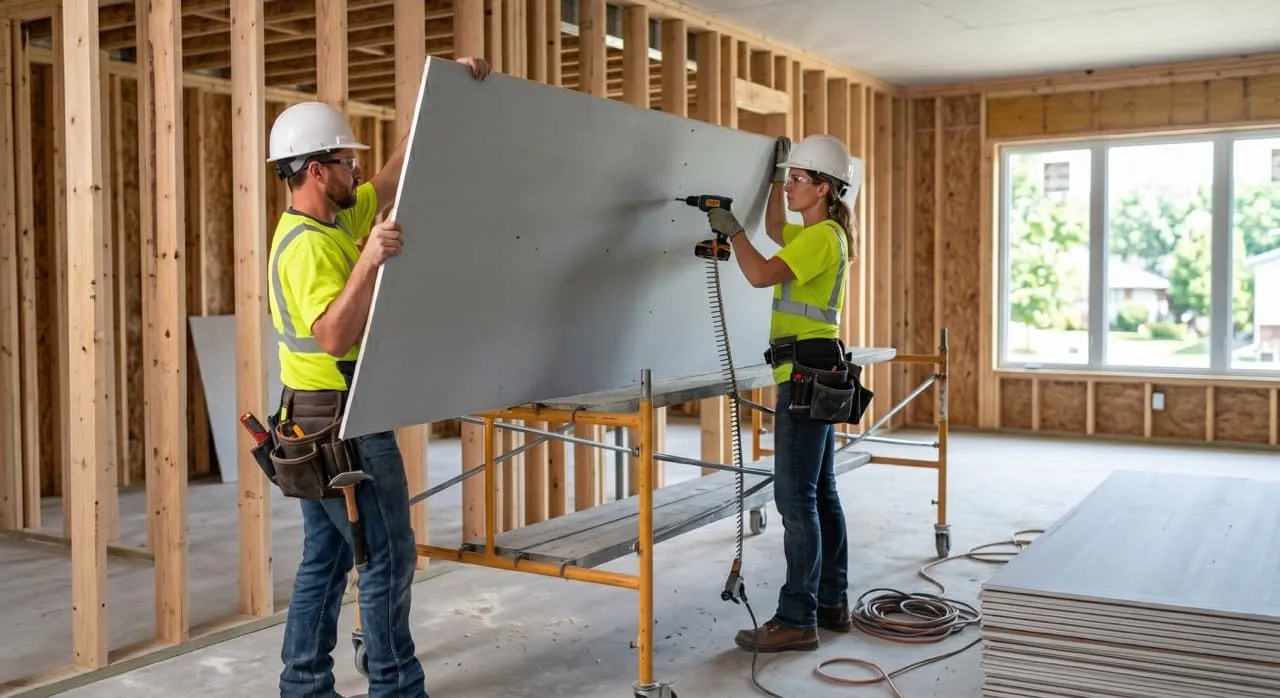
The Drywall Process: Hanging, Taping, and Mudding
The process of closing up your walls happens in several distinct phases:
- Hanging: Crews secure thick gypsum boards (typically 5/8-inch thickness for structural strength and fire protection) directly to the wood wall studs using specialized drywall screws.
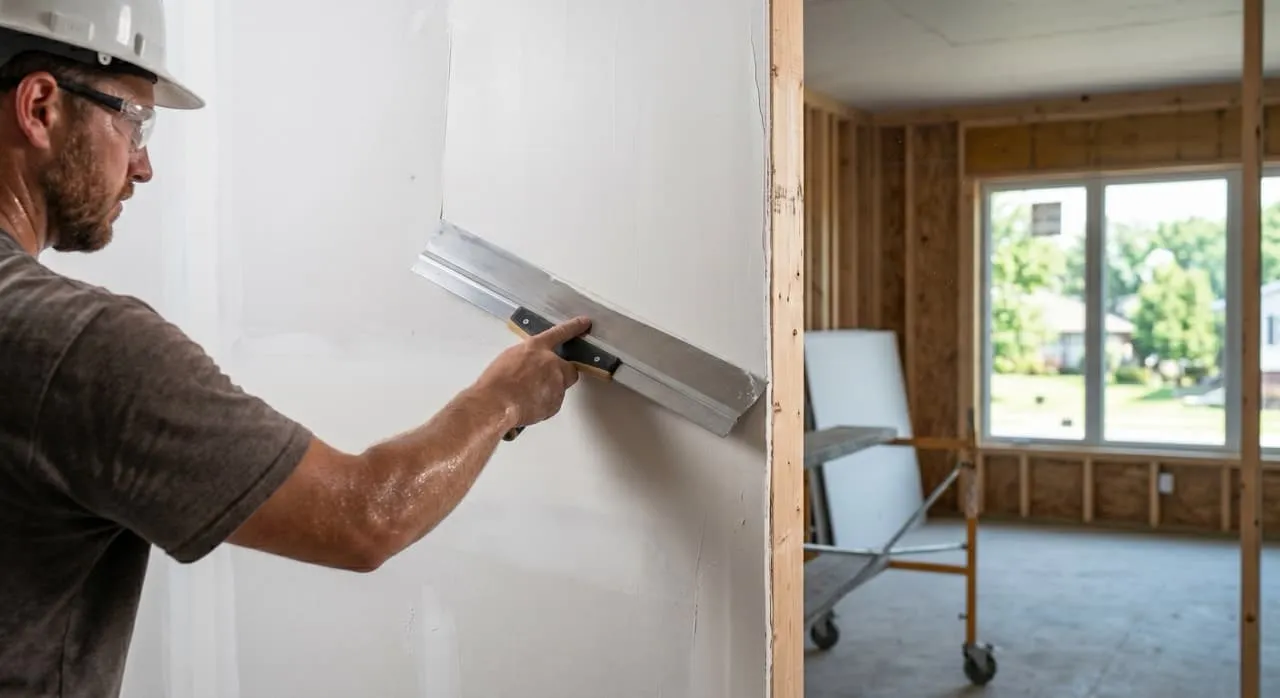
- Taping: Installers embed paper joint tape into a thin layer of wet joint compound over every seam where two drywall sheets meet, creating a continuous bond.
- Mudding: Plasterers apply multiple coats of joint compound over the taped seams and screw heads, feathering the edges progressively wider with wide drywall knives to blend the transitions into the surrounding board.
- Sanding: Once the joint compound is fully dry, crews sand the walls to remove any minor ridges or high spots, preparing the surface for paint.
Understanding Drywall Finish Levels: Why Level 5 Matters
In residential construction, drywall finishes are categorized into six industry-standard levels, from Level 0 (no finish at all) to Level 5 (the premium standard):
- Level 3 & 4: The standard residential finish. Joint compound is applied over the taped joints and screw heads, but the raw paper face of the drywall sheet remains exposed. While this is sufficient for textured walls or heavy wallpapers, it can create issues under smooth, modern matte paints. Drywall paper and joint compound have different absorption rates. When painted, the seams can absorb paint differently than the paper, causing a noticeable defect known as “joint banding” or flashing under grazing sunlight.
- Level 5 Skim Coat: The premium standard. After completing a standard Level 4 prep, plasterers apply a thin, continuous skim coat of joint compound over the entire surface of the wall, covering both the joints and the raw paper face. This creates a completely uniform texture and absorption rate across the entire wall, ensuring your paint sits evenly without visible seams.
Managing the Drywall Dust
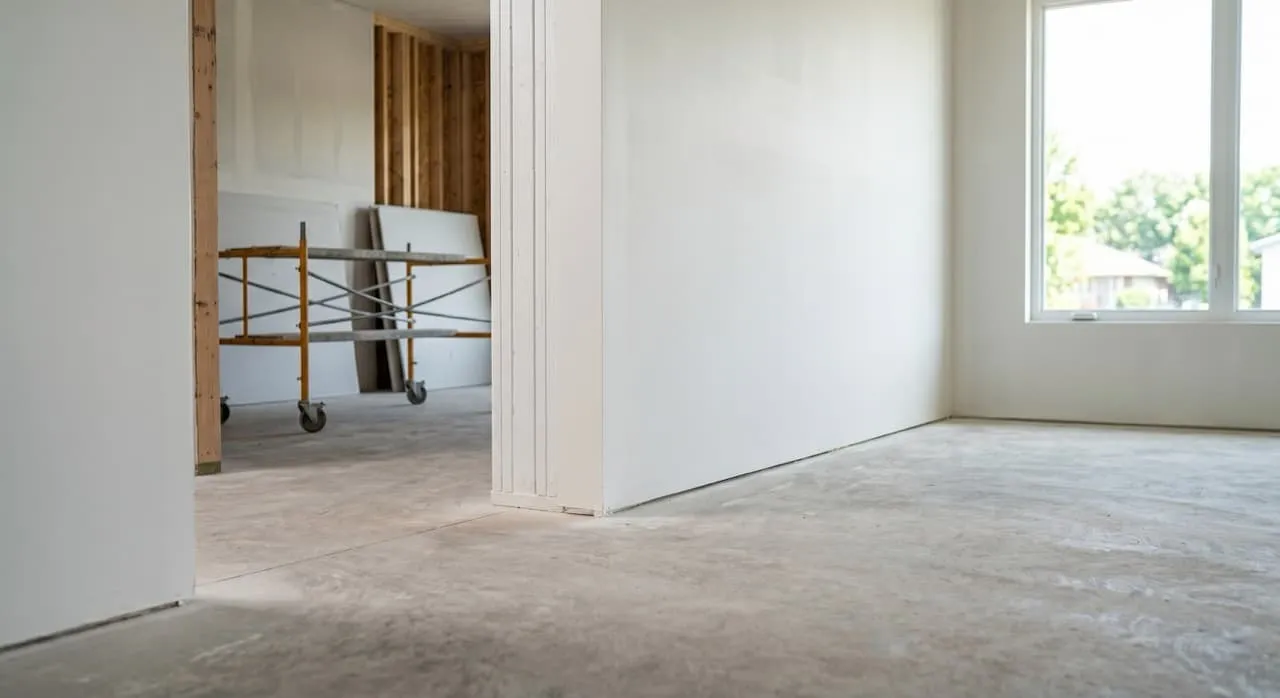
Sanding joint compound produces an incredibly fine, invasive gypsum dust. This dust can easily settle on subfloors, ceiling channels, and structural plates. To prevent this dust from causing installation issues later (such as preventing hardwood floor adhesive from bonding to the subfloor), our crew completed a thorough cleanup before applying our plaster coats.
Crucial Homeowner Call-Outs: What to Watch For
- Insist on a Level 5 Finish for Minimalist Designs: If your architectural design features modern, minimalist trimless openings (like flush baseboards or door frames) and flat or matte paint, insist on a Level 5 skim coat. Without a full skim coat, the sunlight grazing across your smooth walls will highlight minor joint transitions, making your finished walls look uneven.
- Enforce Thorough Subfloor Cleaning: Ensure your drywall crew sweeps and vacuums the entire floor area before plastering begins. Drywall dust left on your subfloor can prevent flooring adhesives from bonding correctly when your hardwood or tile floors are installed later.
What’s Next in the Construction Journey…
With our drywall hung and our interior walls closed, our rooms are formed. However, as our interior trades began preparing for finishes, we faced a major winter challenge: water. Join us in our next post, Episode 30: Chasing the Drip — Troubleshooting a Stubborn Rooftop HVAC Leak, as we share the process of locating and sealing a persistent water leak near our rooftop mechanical platform before it could damage our new drywall.