
There is a common belief in the home remodeling world that to get the job done right, you must stand on your active construction site every morning, coffee in hand, watching over the crew. While being present is helpful, modern life doesn’t always allow for it. In our case, work and family commitments meant that one of us had to spend several critical months of the pre-construction and planning phases living thousands of miles away in China.
Managing a major structural remodel and second-story addition from another continent isn’t easy. It introduces distinct logistical challenges: a 12-to-15-hour time zone difference, spotty communication across international networks, and the inability to physically touch material samples or verify site conditions. Yet, with the right systems in place, we learned that running a long-distance build is entirely possible.
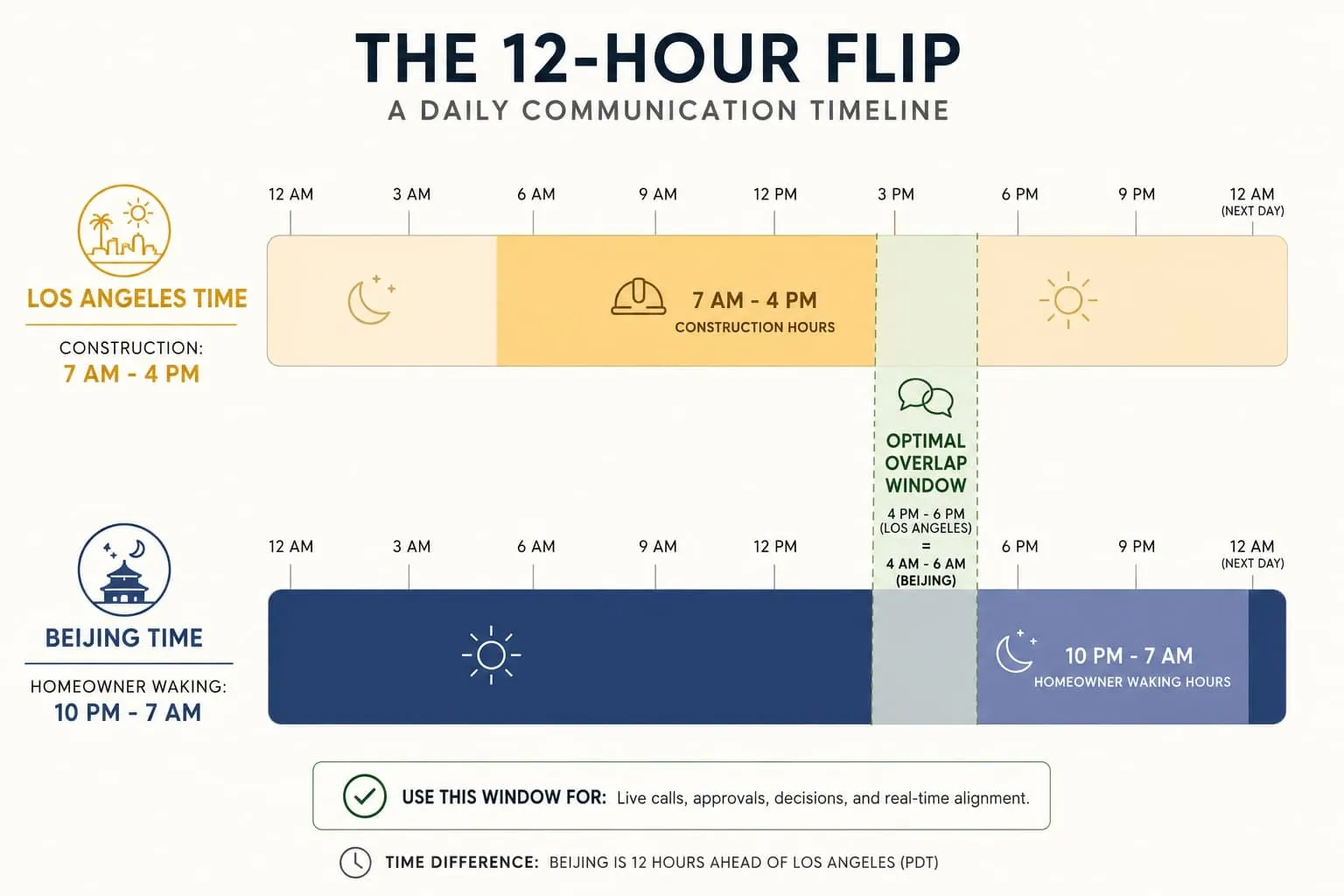
Overcoming the 12-Hour Time Zone Gap
The hardest part of a remote build is the time difference. When the construction office opened at 7:00 AM on site, it was already evening for the overseas partner. When the project managers sent urgent questions about window sizes or plumbing locations at 2:00 PM local time, we were fast asleep.
To prevent this time gap from causing constant project delays, we had to change how we communicated:
- Establish a Daily “Overlap Window”: We designated a 1-to-2-hour window every day when both parties were awake and available (typically our late evening / their early morning). We reserved this time for critical, quick-response questions or short, focused calls.
- The “End-of-Day” Handover: Instead of sending ad-hoc messages throughout the day, we collected non-urgent questions into a single, comprehensive daily email or structured message thread sent at the end of the active workday on site. This allowed the remote partner to review, research, and respond during their daytime hours, ensuring the builder had answers ready before work started the next morning.
Building Your Digital Command Center
You cannot manage a remote construction project using messy text message threads and loose email attachments. To keep our sanity and ensure our builder stayed on track, we set up a secure, organized cloud-based command center.
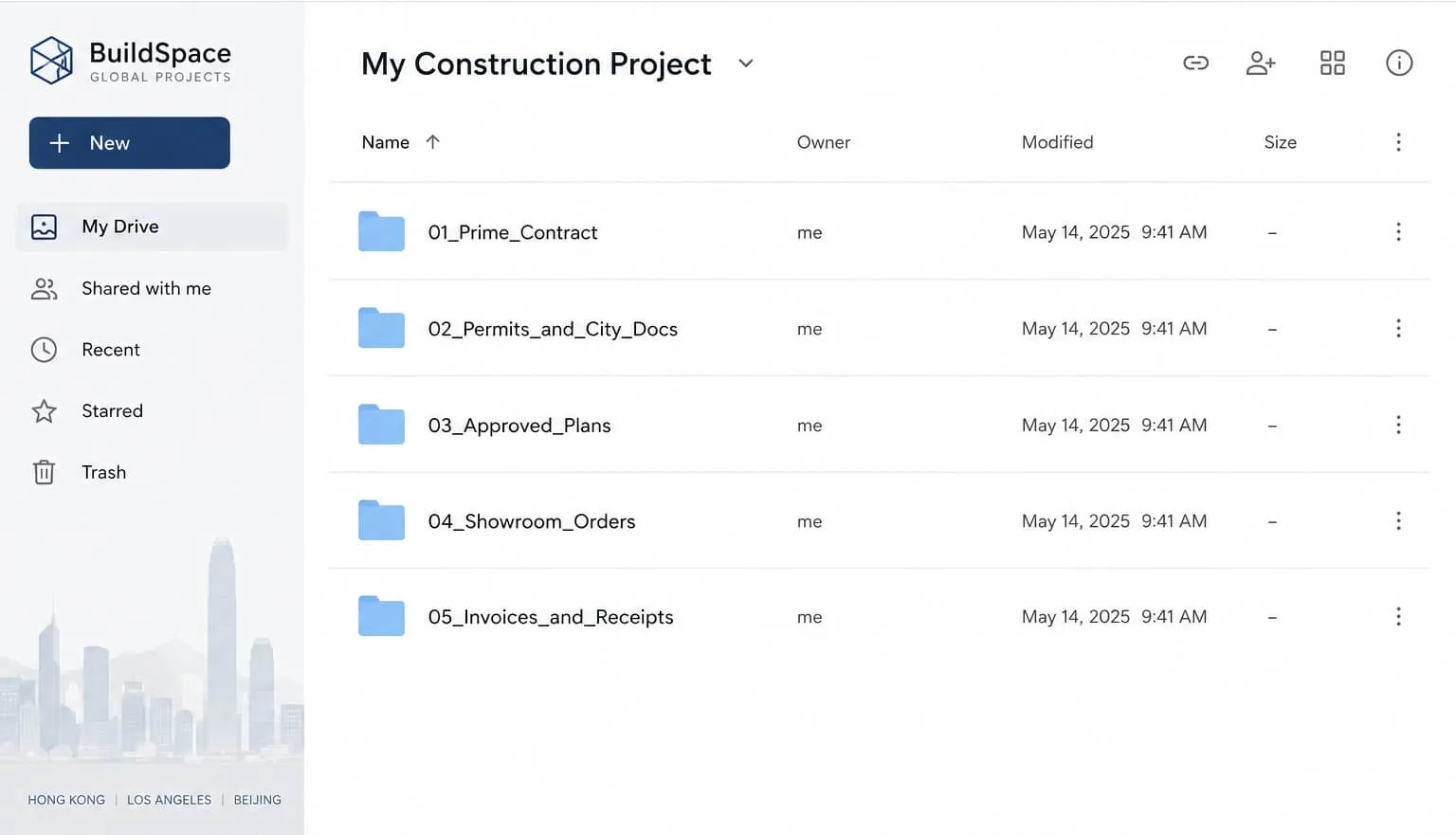
Every document, from the primary structural engineering plans to individual tile orders from our showroom visits, was uploaded to dedicated folders. This digital record-keeping was crucial for several reasons:
- Single Source of Truth: Whenever a question arose on site about a specific material or layout detail, both the contractor and the remote homeowner could reference the exact same file in the cloud, eliminating version-control errors.
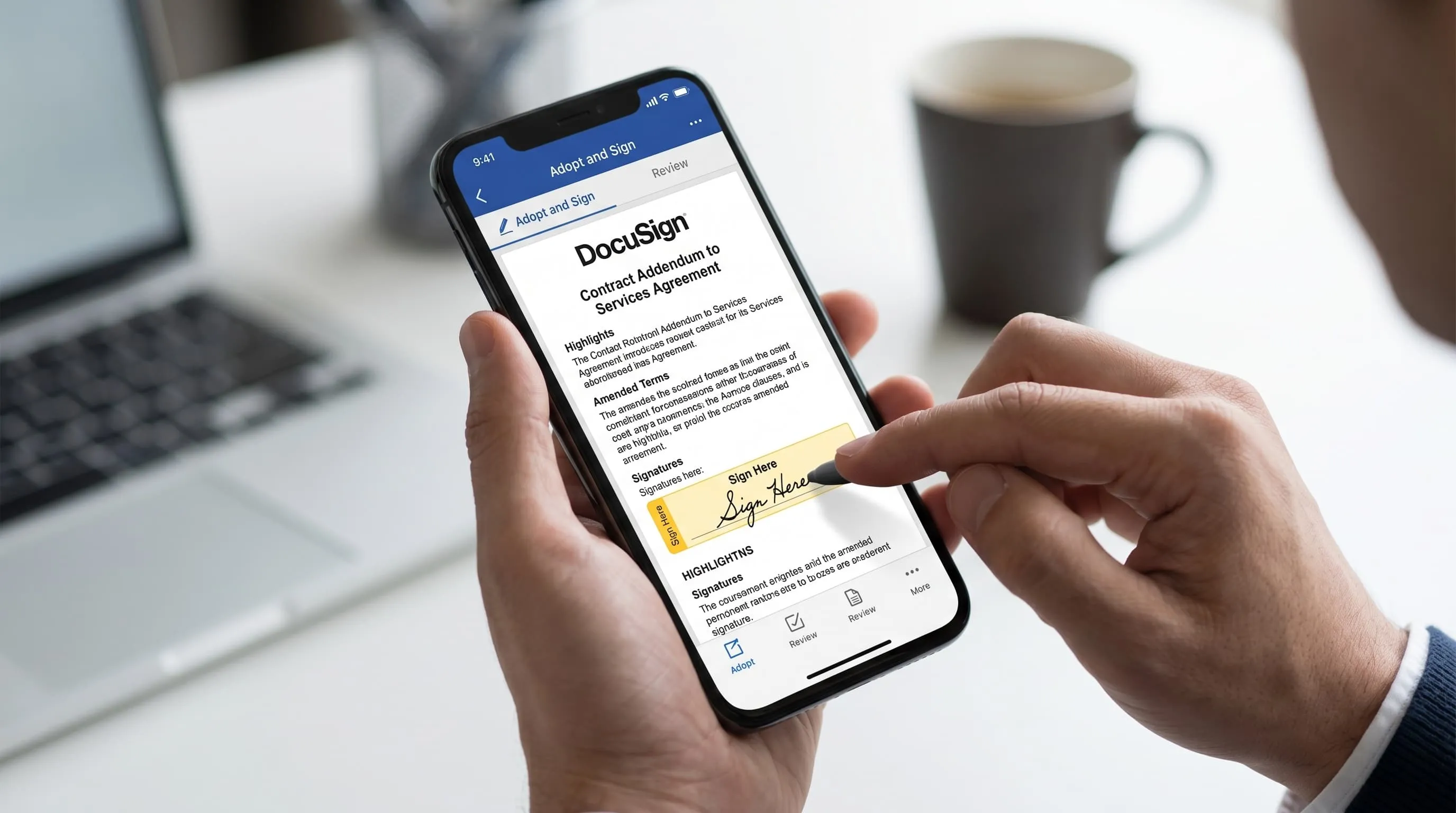
- Digital Contract Executions: We utilized secure document-signing software (like DocuSign) to execute contract addendums, plan revisions, and municipal fee waivers remotely, keeping the paperwork moving without relying on physical mail.
- Real-Time Photo Updates: We set up a shared photo album where the local project manager uploaded weekly progress pictures and short walkthrough videos, helping the remote partner visualize the physical progress of the frame and systems.
Crucial Homeowner Call-Outs: What to Watch For
Managing a major build from a distance requires a shift in how you protect your interests. Here are two critical lessons we learned along the way:
- Establish a Trusted Local “Co-Pilot”: You cannot run a complex, multi-stage remodel entirely from afar without someone you trust on the ground. In our project, one of us was locally on-site to handle physical checks, coordinate with municipal utility field offices, and sign for deliveries, while the other managed design and material selections from abroad. If you do not have a partner or family member locally, consider hiring an independent owner’s representative or construction manager to act as your eyes and ears on site.
- Avoid the “Verbal Agreement” Trap: During construction, quick decisions are often made over the phone. A project manager might call and say, “We ran into a framing conflict; is it okay if we shift this closet wall by 6 inches?” It is incredibly easy to say “yes” to keep the work moving and then completely forget the details. Never rely on verbal agreements. Always follow up every phone call or site discussion with a written, numbered message summarizing what was decided (e.g., “Per our call just now, we approved shifting the Bedroom 2 closet wall 6 inches to the left at no additional cost”). Request that the builder reply with a simple “confirmed” to establish a clear paper trail of decisions.
Turn Your Contract Into a Trackable Build Plan
Upload your construction contract and let AI generate a milestone-based build plan — so you always know what’s supposed to happen next, even from thousands of miles away.
Generate Your Build Plan →Navigating a long-distance build requires structure and clear communication, but establishing these habits early pays dividends throughout the life of your project.
In Episode 3: The 3D Rendering Blueprint, we’ll explore why investing in detailed 3D renderings before submitting plans to the city was one of the best decisions we made — and how it saved us from costly design mistakes before a single wall was touched.