
After months of navigating plan checks, selecting materials in showrooms, and completing hazardous waste remediation, our project reached its first highly visible milestone on February 18, 2025. Demolition day is a visceral experience for any homeowner. Watching heavy machinery systematically tear down parts of the home where you have lived for years is both surreal and exciting.
However, beneath the high-impact visual of falling stucco and timber lies a highly planned, safety-critical phase. A successful demolition phase requires strict adherence to safety protocols, precise utility management, and active dust control to protect the working crew and the surrounding neighborhood.
Structural Demolition vs. Selective Interior Removals
Homeowners often hear the word “demolition” and picture a wrecking ball swinging indiscriminately. In modern residential construction, demolition is a highly selective, controlled process. It is generally divided into two distinct methods:
- Selective Interior Demolition: This is hand-demolition. Before any heavy machinery is brought to the site, workers use crowbars, sledgehammers, and saws to manually strip out non-structural elements. This includes removing old drywall, copper wiring, non-load-bearing partition frames, and salvaged materials (like our bathtub and shutters). Hand-demolition minimizes vibration and protects structural walls that are planned to remain in place.
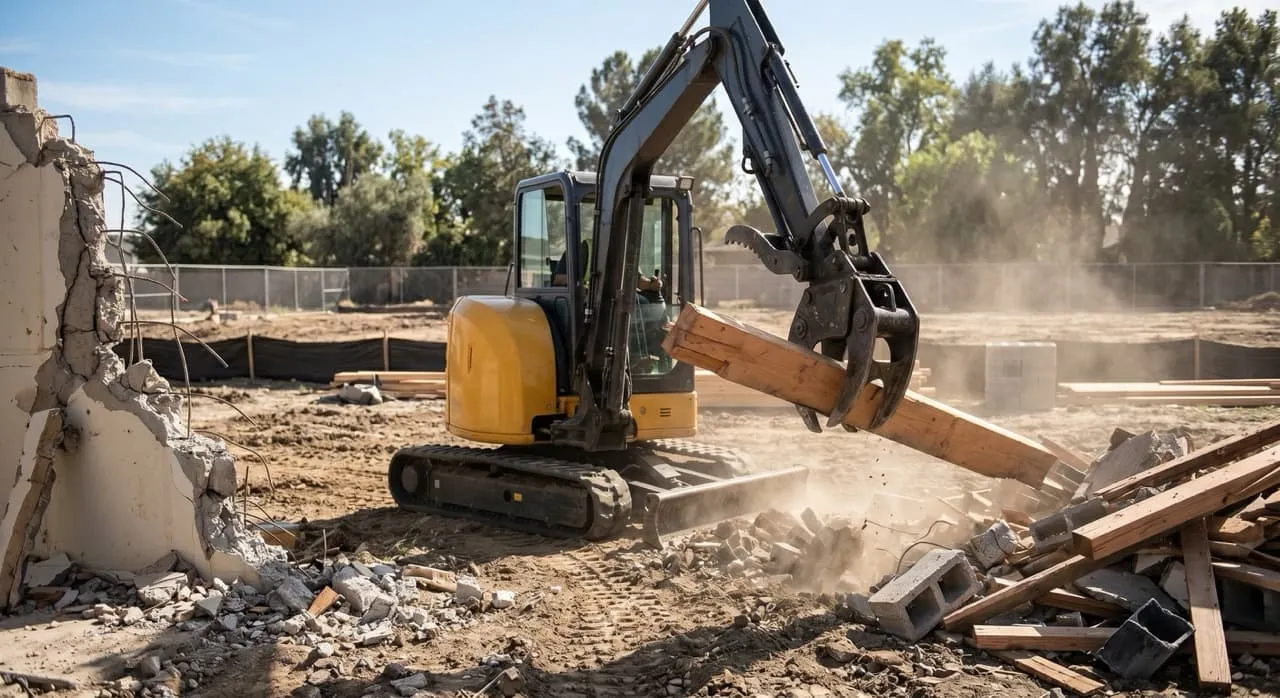
- Structural Demolition: This is where heavy machinery is utilized. On our project, a compact tracked excavator arrived to tear down the rear structural walls, dismantle the roof rafters over the remodeled zones, and excavate the old concrete footings where the new second-story load-bearing posts would eventually sit.
Safety Protocols & Utility Disconnection
The single most critical safety measure of demolition day is managing municipal utilities. Tearing down walls with heavy machinery introduces a high risk of accidentally severing active gas, water, or electrical lines.
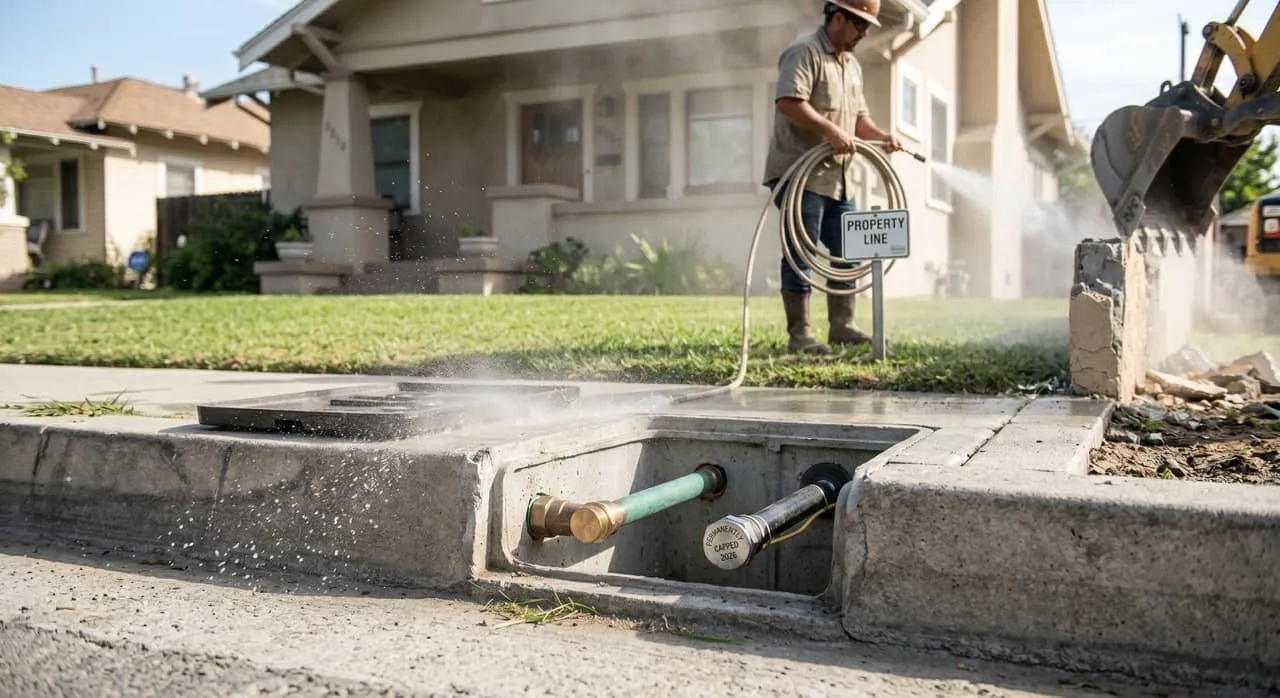
To mitigate this risk, we had to coordinate with local utility companies to officially cap our services. The water and gas meters were disconnected, and the lines were physically capped at the street curb rather than at the house wall. This ensured that even if our excavator accidentally dug into our front yard soil, there was no risk of breaking active, pressurized pipes. For electrical power, the main line was disconnected from our residential masthead and routed through a temporary, GFCI-protected construction power pole.
Dust Mitigation: Protecting Your Neighbors
When stucco, drywall, plaster, and concrete are broken apart, they release significant amounts of fine, dry particulate matter into the air. This dust is not only a nuisance to neighbors; it can contain crystalline silica, which is toxic to breathe.
To prevent demolition dust from blanketing our neighbors’ yards, cars, and outdoor living areas, our general contractor utilized a continuous wet-demolition protocol. Whenever the excavator broke structural stucco walls or crunched concrete foundations, a crew member stood adjacent to the machine, continuously spraying a high-pressure mist of water directly onto the impact zone. The water weighs down the dust, converting airborne particles into heavy, wet debris that falls directly to the ground.
Crucial Homeowner Call-Outs: What to Watch For
- Physically Verify Utility Capping at the Street: Do not trust a verbal confirmation that the utilities are “turned off” at the meters. Walk to the street curb with your project manager and physically verify that the gas and water lines have been disconnected and capped by the utility companies before heavy equipment is allowed to begin demolition.
- Enforce the Wet-Demolition Rule: If you visit your job site on demolition day and see dry dust clouds blowing into neighboring properties, immediately ask your contractor to pause work. The demo crew must continuously spray water over the debris during all active machine demolition. Keeping the dust controlled is essential for maintaining positive relationships with your neighbors.
What’s Next in the Construction Journey…
With our selective and structural demolition complete, our home’s footprint is clear, and the debris has been hauled away. Join us in our next post, Episode 17: Grading & Excavation, as we begin preparing the soil for our foundation and shaping the ground where our new home will stand.