
The transition from planning to physical construction on site is known as mobilization. This is the stage when your property officially transforms from a quiet residential home into an active, locked construction site.
Setting up your perimeter correctly is critical. It establishes site security, complies with municipal safety regulations, and—most importantly—helps manage relationships with your neighbors, who are about to endure a year of dust, traffic, and construction noise.
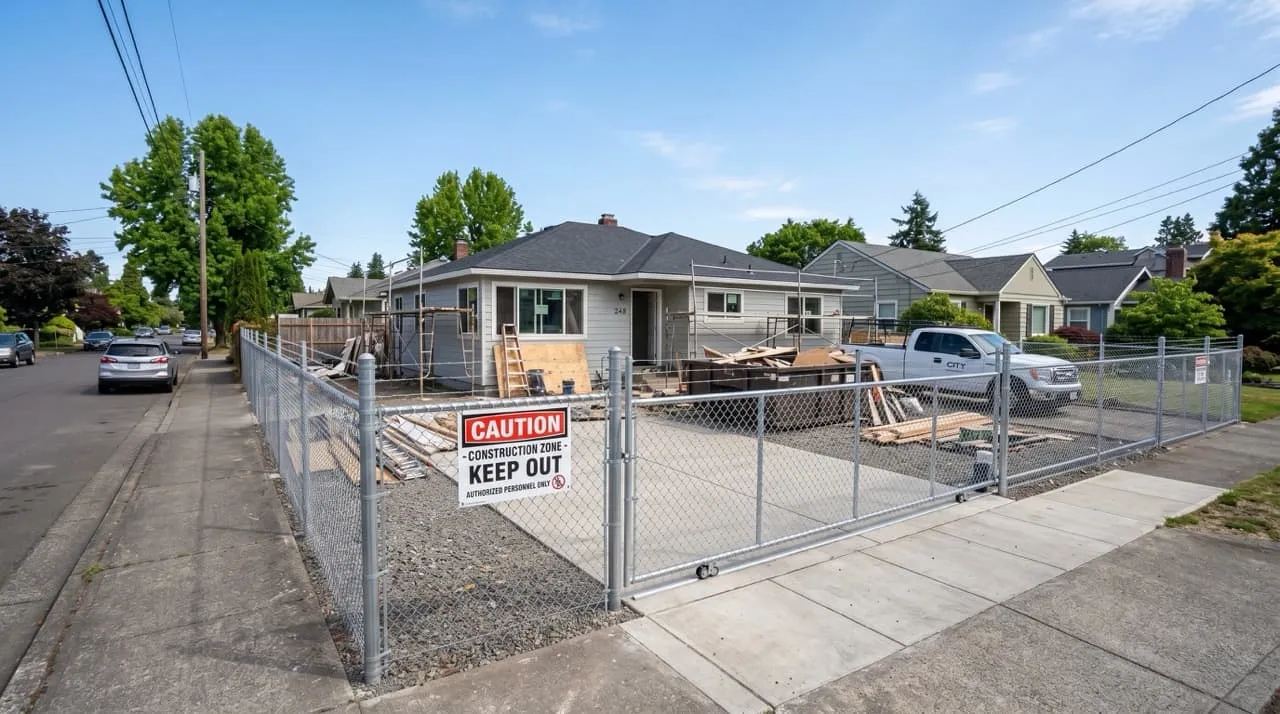
The Logistics of Site Mobilization
To prepare the site for our demolition and excavation crews, our general contractor coordinated several essential steps:
- Perimeter Fencing: Crews installed a 6-foot-tall metal chain-link fence around the entire property boundary, including a locked rolling gate across our driveway to prevent unauthorized access.
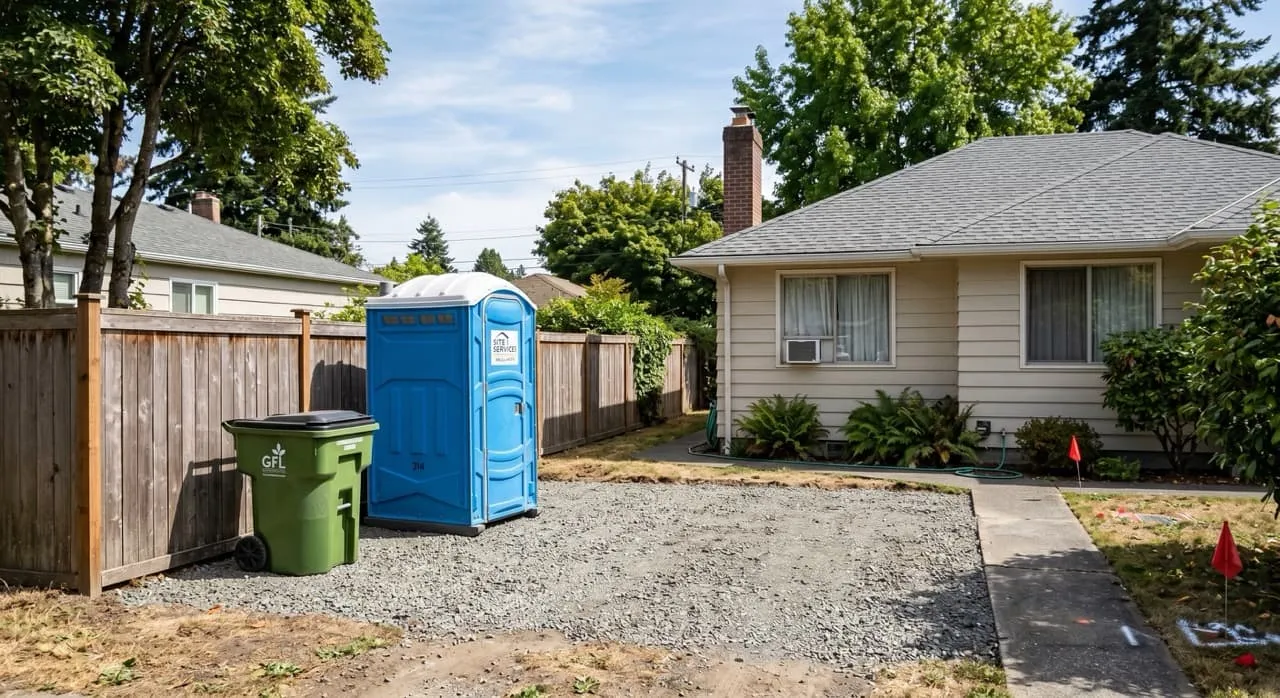
- Temporary Facilities: The team delivered a temporary portable toilet (porta-potty) and set up a dedicated waste containment bin.
- Utility Shut-offs: Technicians capped our existing residential water, gas, and electrical lines at the street, setting up temporary electrical poles and water manifolds for the working crews.
Managing Neighbor Relationships
A major home remodel and second-story addition is a loud, intrusive process. To keep a good relationship with our neighbors, we took several proactive steps:
- Open Communication: Before the security fence went up, we visited our immediate neighbors to share our construction timeline, introduce our project manager, and provide our direct contact numbers.
- Defining Working Hours: We agreed on strict daily working hours (e.g., 7:30 AM to 4:00 PM) to ensure that loud machinery did not disturb our neighbors’ evenings or weekends.
- Boundary Line Checks: We walked the property lines with our adjacent neighbors to ensure our temporary fencing didn’t block their shared pathways or damage existing landscaping.
Crucial Homeowner Call-Outs: What to Watch For
- Mind the Porta-Potty Placement: City guidelines and neighborhood courtesy dictate where temporary toilets should be placed. Avoid placing the porta-potty directly beneath a neighbor’s window or adjacent to their main outdoor seating area. Position it in a discreet, ventilated area that is easily accessible to weekly cleaning trucks.
- Coordinate Parking Spaces Early: Construction trucks and delivery vehicles require substantial parking space. Speak with your contractor and neighbors early about parking expectations to prevent cement mixers or dumpster trucks from blocking neighboring driveways or narrow street passages.
Neighbor Communication Template
Fill in your project details and get a ready-to-print letter to hand-deliver before your construction fence goes up. Takes two minutes.
Generate Your Letter →What’s Next in the Construction Journey…
With our site secured, permits in hand, and the hazardous materials safely removed, we are finally ready for the structural transition. Join us in our next post, Episode 16: Demolition Day, as we take down the old walls and officially begin the physical transformation of our home.