
Discovering that our kitchen flooring adhesive contained 20% asbestos was a stressful moment, but it is a common challenge in home renovations. Once the environmental audit confirmed the presence of Asbestos-Containing Materials (ACMs), we had to hire a specialized, licensed abatement firm to remove the floor mastic before breaking ground.
Asbestos abatement is highly regulated. It is not a job your general contractor’s crew can handle. It requires a dedicated team trained in hazardous containment, specialized air filtration, and legal hazardous waste disposal.
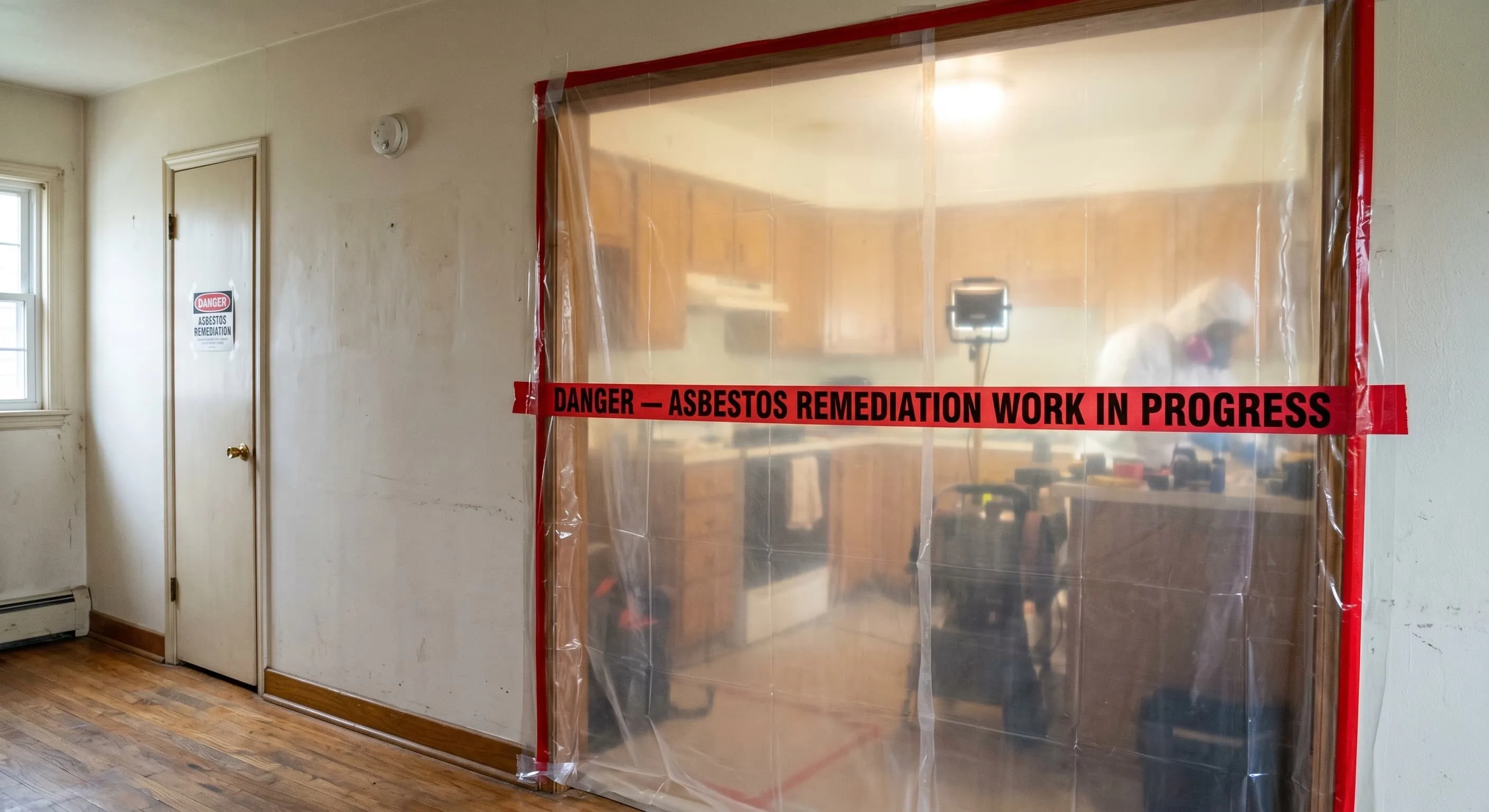
Inside the Containment Zone
To prevent toxic microscopic fibers from escaping and contaminating our home and neighborhood, the abatement team built a secure containment zone around our kitchen area:
- Plastic Barriers: The team sealed all doors, windows, and HVAC vents with thick, double-layered polyethylene sheeting, creating an airtight seal.
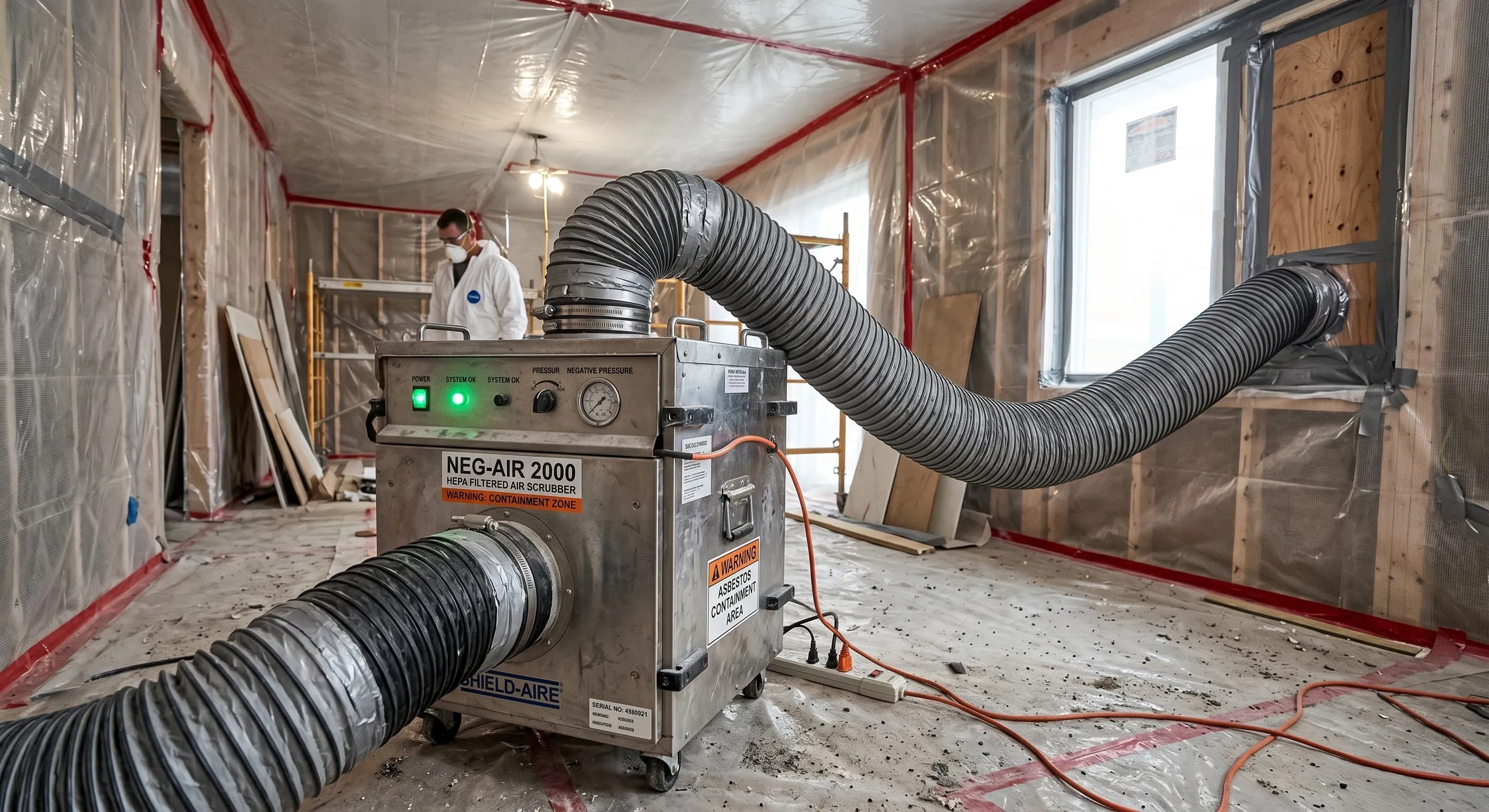
- Negative Air Pressure: They hooked up large negative-pressure HEPA air scrubbers. These machines continuously pull air out of the containment zone and pass it through advanced HEPA filters, ensuring any loose fibers are captured and preventing contaminated air from leaking out of the room.
- Wet Removal Methods: To minimize dust, workers sprayed the floor with water and chemical solvents before carefully scraping up the tile and mastic.
- Hazardous Waste Disposal: All removed materials were sealed in thick, labeled hazardous waste bags, placed in a locked truck, and transported to a certified hazardous waste landfill.
Securing the Air Clearance Certificate
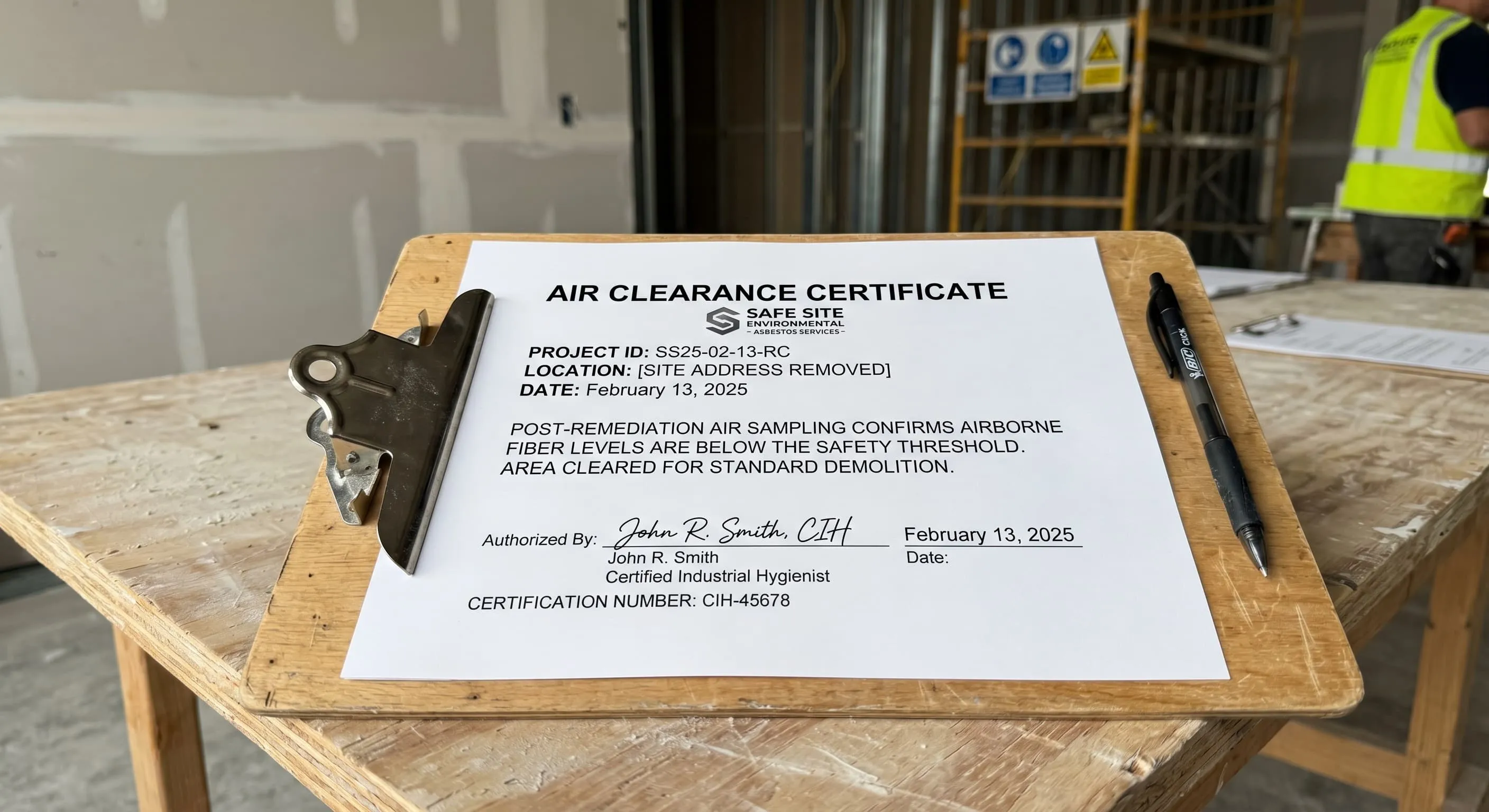
Once the physical mastic was scraped away, the containment zone had to pass a strict clearance check. We hired an independent third-party environmental inspector to perform a visual inspection and conduct air sampling inside the containment room.
Using high-volume air pumps, the inspector collected air samples on filter slides and analyzed them under a microscope to verify that the airborne fiber count was well below the legal safety threshold. Only after receiving our official, written Air Clearance Certificate were the plastic containment barriers dismantled, allowing our general contractor to resume work safely.
Crucial Homeowner Call-Outs: What to Watch For
- Enforce Independent Air Clearance Testing: Never allow the same company performing the asbestos abatement to conduct the final air clearance testing. This is a conflict of interest. Always hire a separate, independent environmental firm to perform the final inspection and air monitoring.
- Require a Manifest for Disposal: As the property owner, you are legally responsible for the hazardous waste generated on your site. Once the abatement is complete, require your contractor to provide a copy of the official waste shipment record or landfill disposal manifest, proving that the asbestos was disposed of at a certified hazardous waste facility.
Not Sure If Your Home Has Asbestos?
Before calling an abatement company, find out whether your home’s build year puts you at risk. Enter your year to see which materials to test for and what it will cost.
Check Your Home’s Risk →What’s Next in the Construction Journey…
In Episode 14: What to Save — Identifying and Storing Salvageable Fixtures, we’ll cover the pre-demolition salvage walkthrough — how we identified which high-quality fixtures, valves, and doors were worth carefully removing and protecting before the demolition crew arrived.