
With our permits approved and our contract finalized, we were eager to break ground. However, before any structural demolition can legally begin on an older home, environmental safety regulations require a comprehensive hazardous materials survey. This testing is not just a building department requirement; it is a critical safety measure designed to protect the working crew, your neighbors, and your family from toxic microscopic fibers and dust.
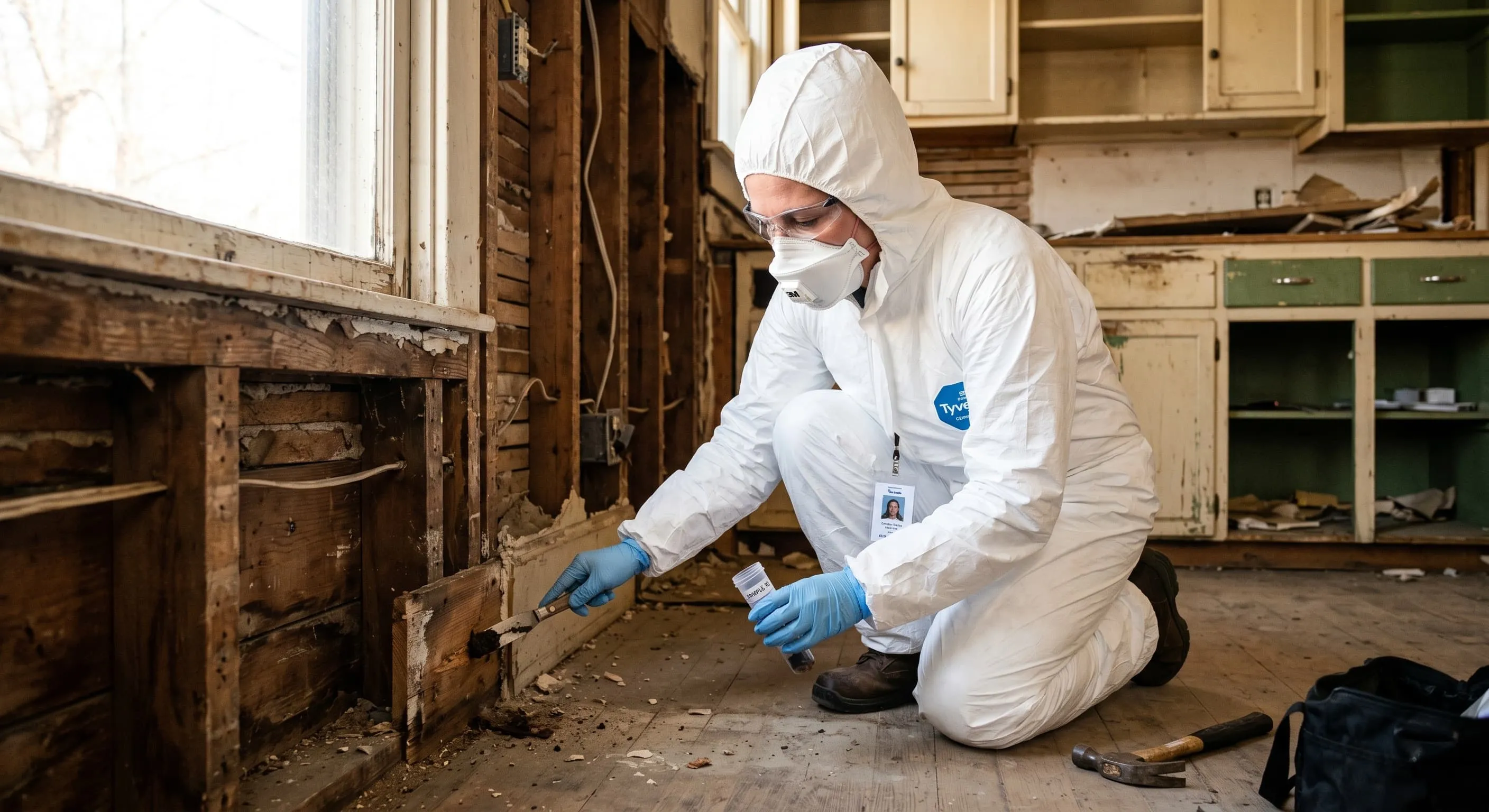
We hired a certified industrial hygienist to perform an environmental audit of our existing single-story house. The process involves taking physical core samples of drywall, plaster, textured ceilings, duct wrap, exterior stucco, and flooring mastic to analyze them under a lab microscope.
Does Your Home Need Environmental Testing?
Enter your home’s build year to see which hazardous materials are likely present — lead paint, asbestos, lead pipes — and exactly what tests to order before demolition begins.
Check Your Home’s Risk →Why Older Materials Require Testing
Older residential properties built before the late 1980s routinely utilized materials containing lead and asbestos for durability, fireproofing, and insulation. During a demolition phase, tearing out these walls releases fine, toxic dust into the air:
- Lead-Based Paint: Commonly found in older paint layers. When sanded or demolished, lead dust is easily inhaled or ingested, posing severe neurological risks, especially to children.
- Asbestos Fibers: Frequently used in acoustic ceilings, drywall joint compounds, stucco, and flooring adhesives. If disturbed, microscopic asbestos fibers can remain suspended in the air, risking long-term lung damage if inhaled.
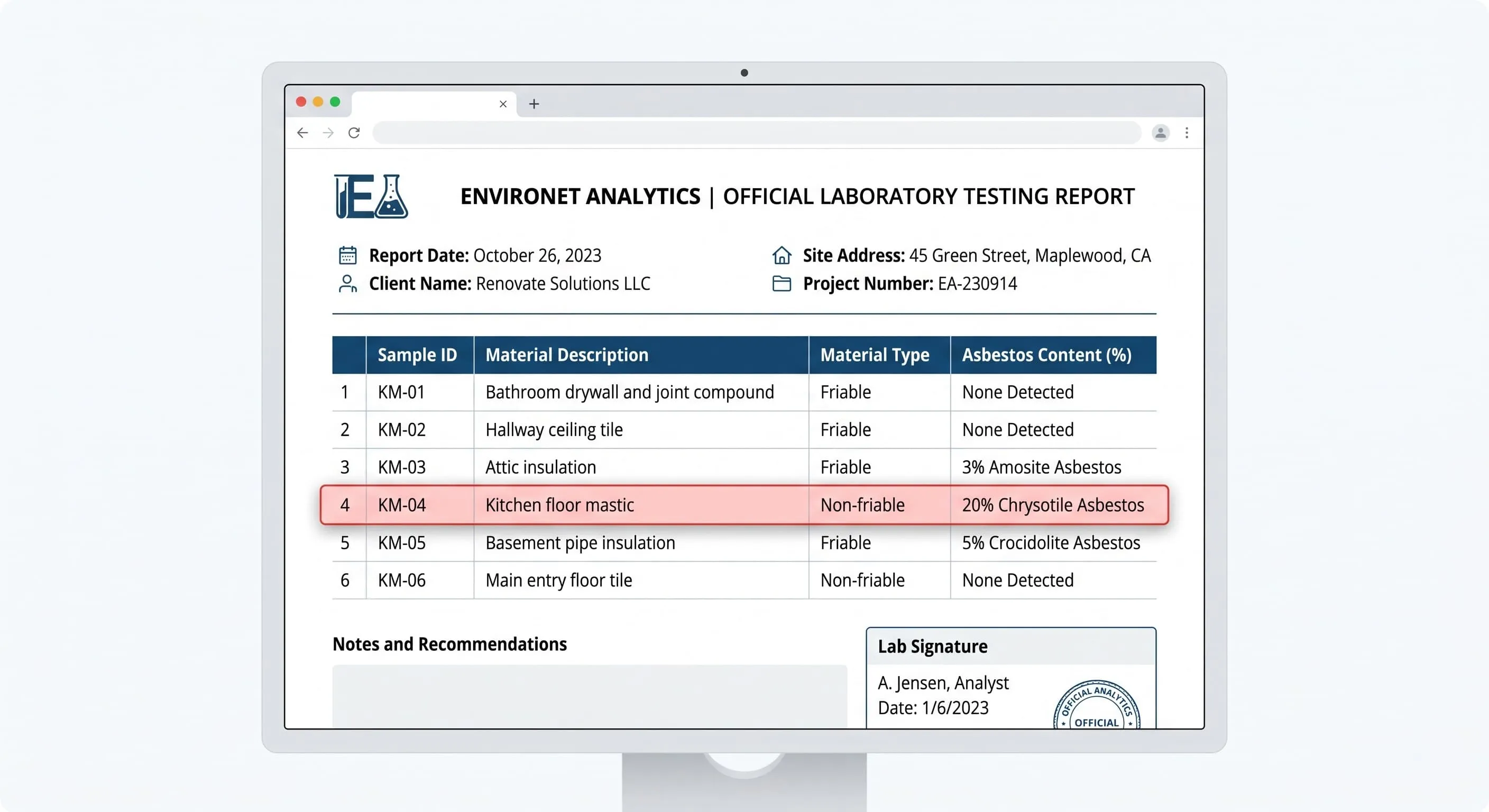
Our laboratory analysis brought back mixed results. Our interior and exterior walls showed minimal traces of lead-based paint (under 1%), which was low enough to be handled through standard dust-containment practices on site. However, the tests revealed a significant safety risk: the black adhesive mastic beneath our old kitchen flooring contained 20% chrysotile asbestos.
Understanding the 1% Threshold
Under federal Environmental Protection Agency (EPA) and state air quality regulations, any material containing more than 1% asbestos is classified as an Asbestos-Containing Material (ACM). Because our kitchen flooring mastic measured at 20%, we could not proceed with standard demolition.
By law, this material had to be removed by a licensed, third-party hazardous waste remediation company before any other demolition work could begin. This discovery required us to halt our general construction timeline and pivot immediately to environmental safety management.
Crucial Homeowner Call-Outs: What to Watch For
- Test Wide and Deep: Do not let your inspector take shortcuts. Ensure they sample all areas slated for demolition, including the paper wrap on heating ducts, window glazing putty, transite pipes, and the adhesive backing on vinyl flooring, as these are common areas where asbestos was used.
- Verify Lead Concentrations: Even if your home has been repainted recently, older paint layers underneath may contain lead. Knowing the exact lead concentrations helps your general contractor use proper lead-safe work practices (such as wet-sanding and plastic sheeting) to prevent hazardous dust from spreading into your neighborhood.
What’s Next in the Construction Journey…
In Episode 13: Safely Handling Asbestos Abatement, we’ll take a step-by-step look at what the licensed remediation team actually did — from sealing the containment zone and running negative-pressure air scrubbers to passing the independent air clearance test that legally cleared us for demolition.