
When calculating the cost of a major home addition, most homeowners focus on materials and labor. However, municipal fees can add significant out-of-pocket costs to your permitting phase. When our plans were finalized, we were hit with an unexpected hurdle: our local building department assessed a substantial “Affordable Housing Linkage Fee” on our new second-floor square footage.
These development impact fees are designed to fund local infrastructure, but on a major remodel, they can add tens of thousands of dollars to your permit costs. Fortunately, we discovered that our city offered an exemption program for homeowners who build additions but commit to occupying the property rather than immediately flipping it. Taking advantage of this program saved us significant capital, but it required us to navigate a complex legal covenant and record a restriction against our property title.
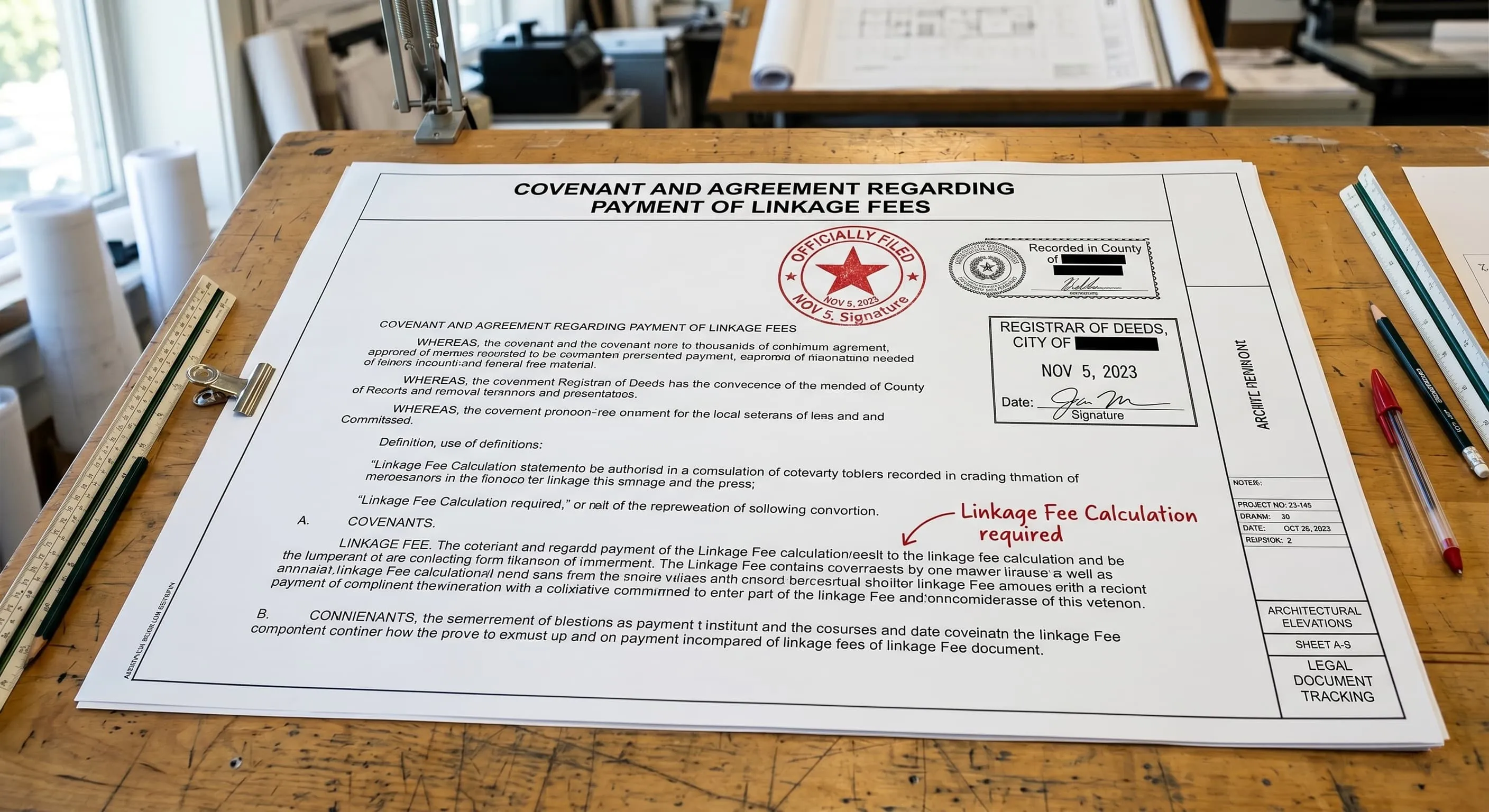
What is a Housing Linkage Fee?
Housing linkage fees are development impact fees charged by municipalities on new construction or major square-footage additions. The fee is calculated on a per-square-foot basis of the new addition.
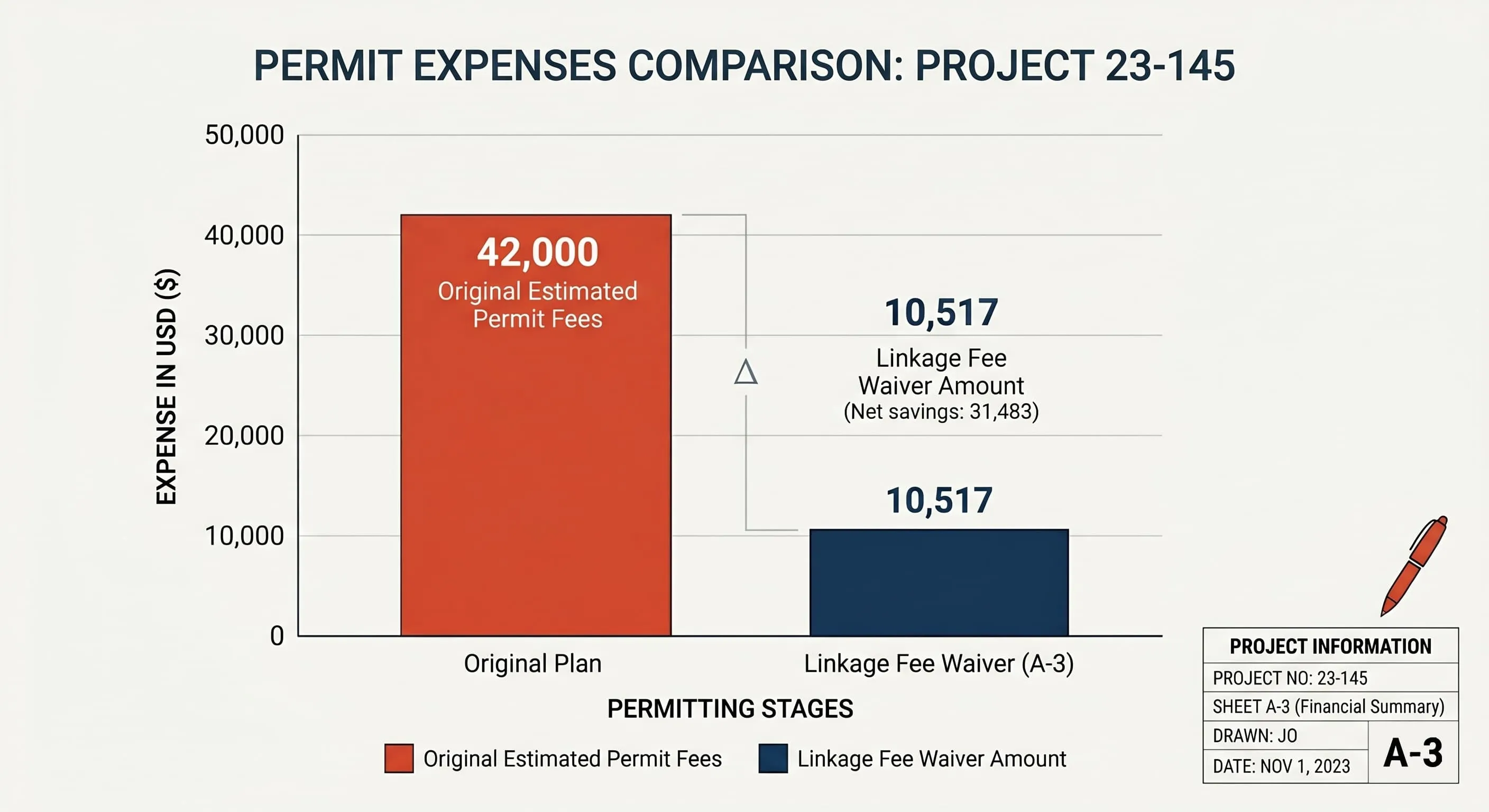
In our project, our initial permit and linkage fee calculation was estimated to cost nearly $42,000. On a project with a base contract of $790,000, this represented a massive, non-structural out-of-pocket cost.
The Owner-Occupant Fee Waiver Exemption
To protect long-term residents from being priced out of remodeling their own homes, many cities offer a full or partial waiver of these linkage fees if you meet specific criteria:
- The Exemption: If you are an owner-builder who plans to live in the remodeled home as your primary residence, you can apply to have the linkage fees waived.
- The Savings: By successfully applying for this waiver, our total municipal permit fees dropped from our initial estimate of $42,000 down to exactly $10,517—a massive savings that went straight back into our contingency reserves.
The Catch: Title Restrictions and the 3-Year Rule
Municipalities do not waive these fees without legal assurances. To prevent developers from abusing the program under the guise of an owner-occupancy, the city requires you to execute a legally binding Covenant and Agreement.
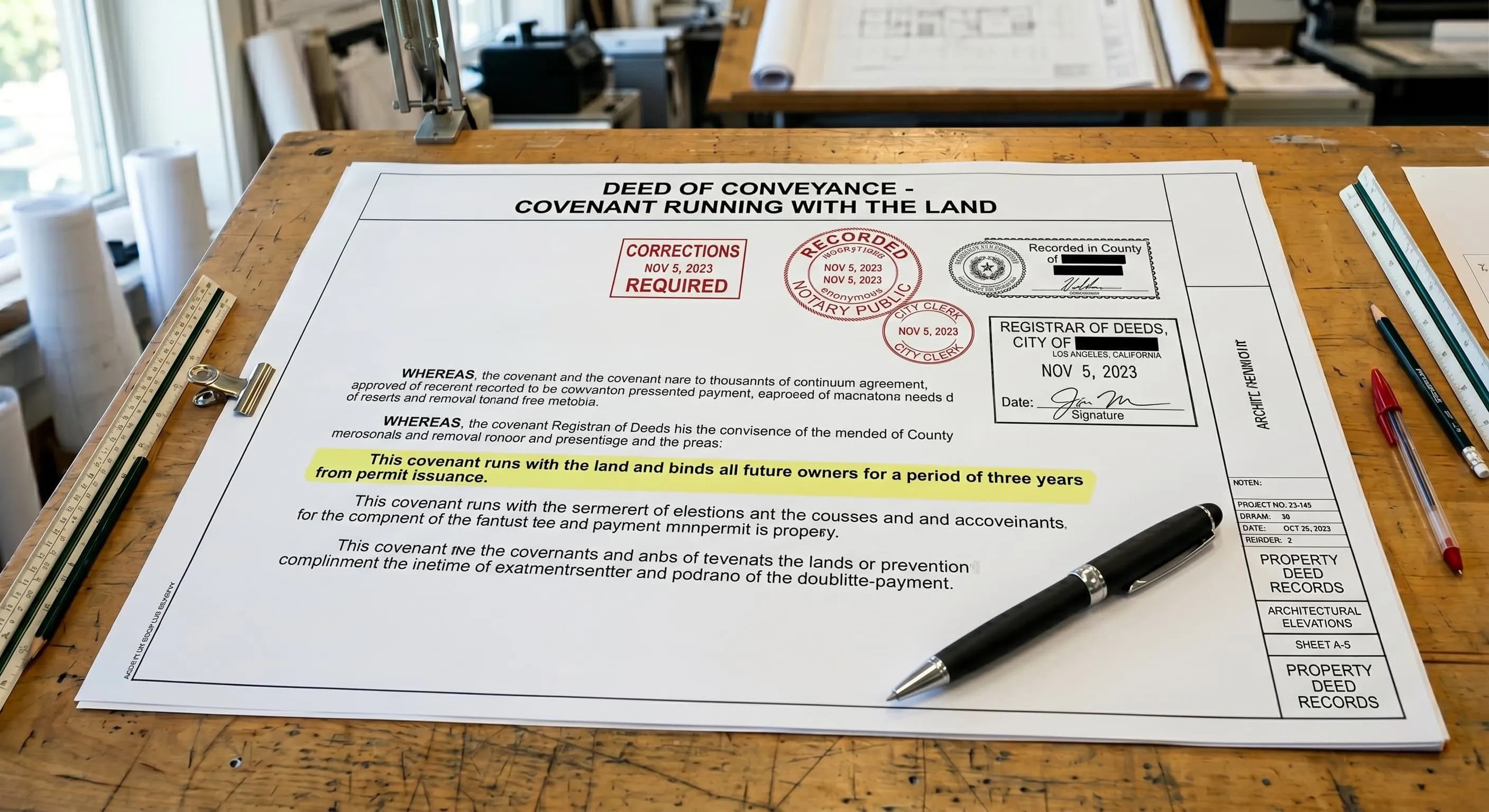
This document is notarized and officially recorded against your property deed at the county registrar’s office. It “runs with the land,” meaning it is attached to your property title and visible to any future buyers or credit lenders:
- The Occupancy Commitment: You must commit to occupying the home as your primary residence for a minimum of three years from the date the final building permit is issued and signed off.
- The Penalty: If you sell, transfer, or lease the home to tenants within that three-year window, the waived linkage fees become immediately due to the city, and the covenant acts as a legal lien against your title until paid in full.
Because one of us was traveling overseas in November 2024 when these documents were finalized, we had to coordinate international remote online notarization (RON) and file the documents electronically to keep our plan check moving forward.
Crucial Homeowner Call-Outs: What to Watch For
- Ask Your Architect About Exemption Covenants: Do not expect your contractor or the city clerk to automatically apply fee waivers. Explicitly ask your design team if your municipality offers linkage or development fee exemptions for primary residents, and request the application forms early in the plan check process.
- Understand Your Long-Term Living Commitments: Before signing and recording a fee-waiver covenant, make sure you are comfortable committing to live in the home for the specified period (typically three years). If an unexpected relocation or financial change forces you to sell or rent out the house before the term is up, you will have to pay the entire waived fee back to the city before you can cleanly transfer the title.
What’s Next in the Construction Journey…
In Episode 12: The Environmental Audit — Testing for Asbestos and Lead, we’ll walk through the mandatory hazardous materials survey our city required before we could pull a demolition permit — including what happened when the lab results came back showing 20% asbestos in our kitchen floor mastic.