
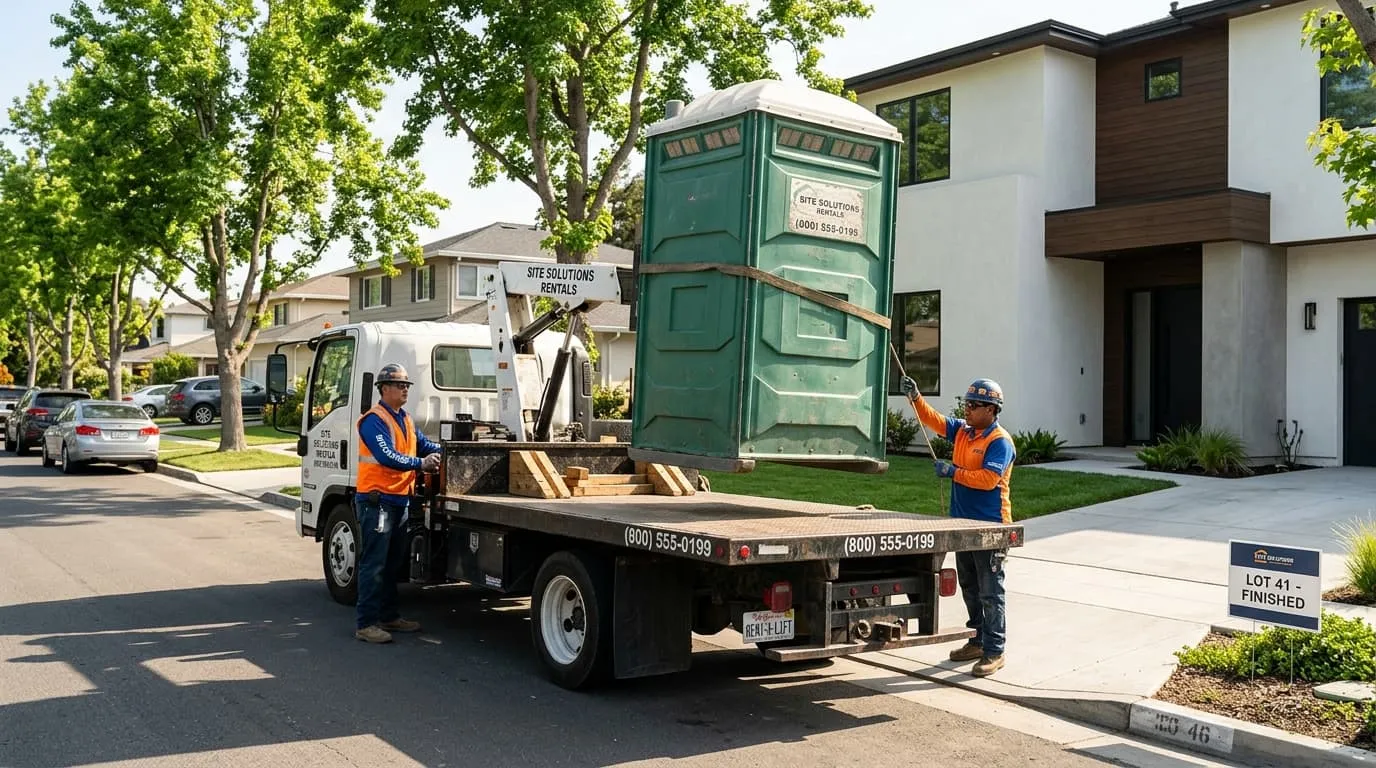
On May 26, 2026, the journey that began with our first architectural planning discussions in September 2023 reached its official conclusion. On this day, a flatbed utility truck arrived at our property to dismantle our temporary perimeter fencing and haul away our on-site portable toilet.
While moving into your newly remodeled home is the emotional end of a construction project, the official close-out is administrative. Completing a major residential down-to-the-studs remodel and second-floor addition requires a structured, administrative process. To protect your investment, you must compile your close-out documentation, secure your lien releases, and organize your warranties before your builder officially signs off on the project.
The Importance of Legal Close-Out: Securing Your Lien Releases
The most critical legal step of project completion is obtaining lien releases. In residential construction, subcontractors (such as plumbers, electricians, or roofers) and material suppliers have the legal right to record a “mechanics’ lien” against your property title if they are not paid by your general contractor, even if you have already paid your contractor in full.
To protect your property title, we went through a comprehensive lien-release collection process:
- The Document: We required our general contractor to provide signed Unconditional Waiver and Release on Final Payment forms from themselves and every major subcontractor who worked on our home.
- The Verification: These signed waivers confirm that all trades have been paid in full for their labor and materials, legally protecting our property from any future structural title claims or liens.
Building Your Homeowner Close-Out Binder
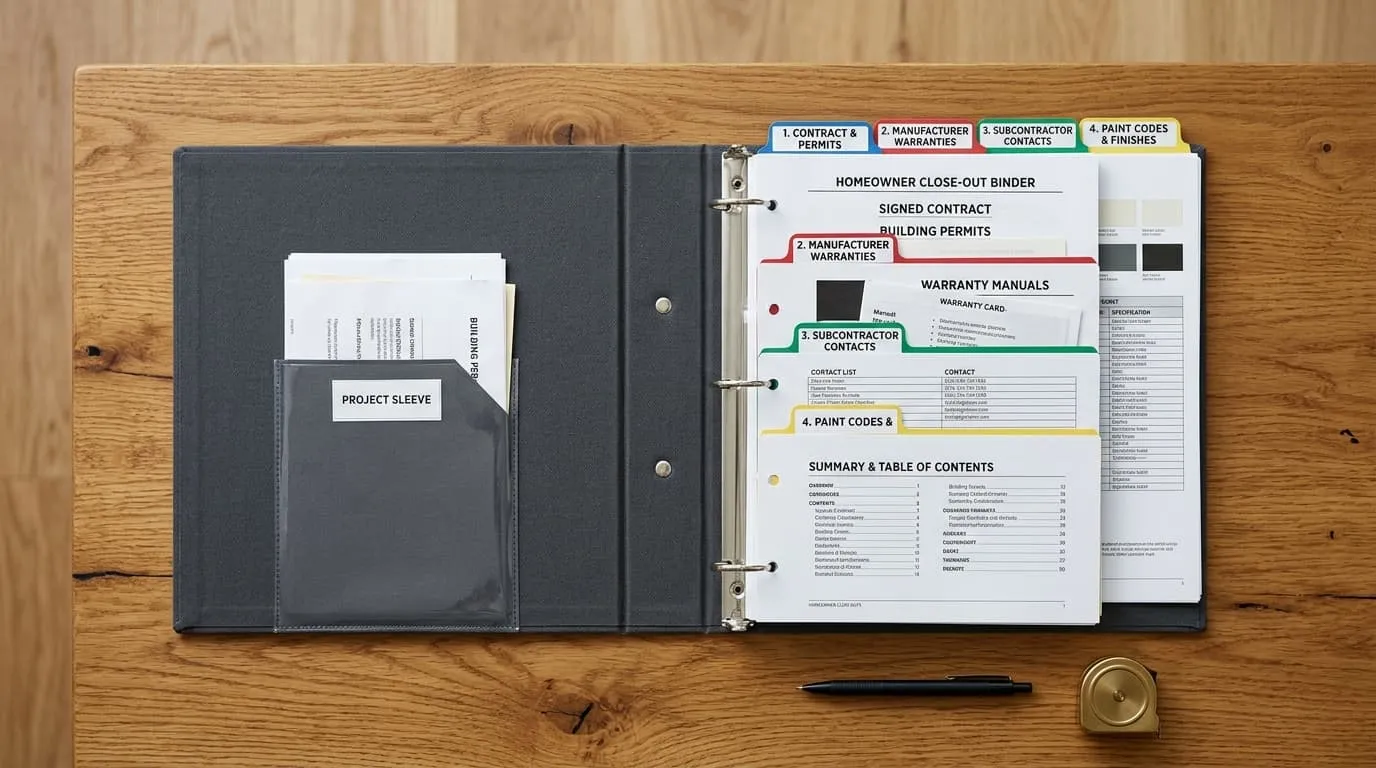
When your project is finished, your builder should hand over a file of manufacturer manuals, paint formulas, and warranties. We compiled all of these documents into a secure, organized physical binder and a mirrored digital cloud folder:
- Product Warranties: We filed our manufacturer warranty certificates, including the lifetime warranty documents for our new vinyl windows, our appliance registration forms, and our builder’s two-year workmanship and ten-year bathroom waterproofing warranties.
- Paint Codes: We kept a card listing the exact paint formulas used on our walls (Benjamin Moore Super White, Chantilly Lace, and Distant Gray) for future maintenance touch-ups.
- Subcontractor Directory: We compiled a contact directory of every key subcontractor who worked on the home (the electrician, plumber, HVAC installer, and gate technician), ensuring we knew exactly who to call if a system required maintenance down the road.
- Signed Permit Cards: We filed our physical city job card, showing every signed inspection box, along with our permanent municipal Certificate of Occupancy.
Crucial Homeowner Call-Outs: What to Watch For
- Do Not Issue Final Payment Without Signed Unconditional Releases: Never release your contractor’s final milestone or holdback check until you have received signed, written “Unconditional Waiver and Release on Final Payment” forms from the general contractor and all major subcontractors. These releases are your only legal protection against mechanics’ liens on your property.
- Create a Physical and Digital Homeowner Binder: Organize your close-out files immediately. Keep a physical binder in your home with appliance manuals, paint codes, and structural permits, and upload digital scans of these documents to a secure cloud folder. This ensures that you have access to your home’s technical specifications whenever future maintenance or repairs are needed.
A Look Back at the Journey
Reflecting on the timeline of our project shows the persistence and patience required to complete a major custom remodel:
- September 2023: First architectural concept sketches and pre-planning.
- April 2024: Prime contract finalized and signed.
- January 2025: Building permits approved; site testing completed.
- February 2025: Structural demolition commenced.
- June 2025: Framing completed; passed rough inspections.
- December 2025: Finishes installed; appliances delivered.
- February 2026: Passed final inspections; moved back into our home.
- May 26, 2026: Final punch list items completed; temporary site facilities removed.
Planning Your Next Project?
Upload your construction contract to generate a milestone-based build plan — so your next renovation has the structure this one took years to develop.
Generate Your Build Plan →Remodeling a home is a long, complex journey filled with structural challenges, design decisions, and logistical hurdles. However, by establishing clear communication, enforcing strict contract milestones, protecting your contingency buffer, and working collaboratively with your general builder as a team, you can successfully navigate the process and build a space that fits your family’s life for years to come.
Thank you for following along on our home improvement journey!